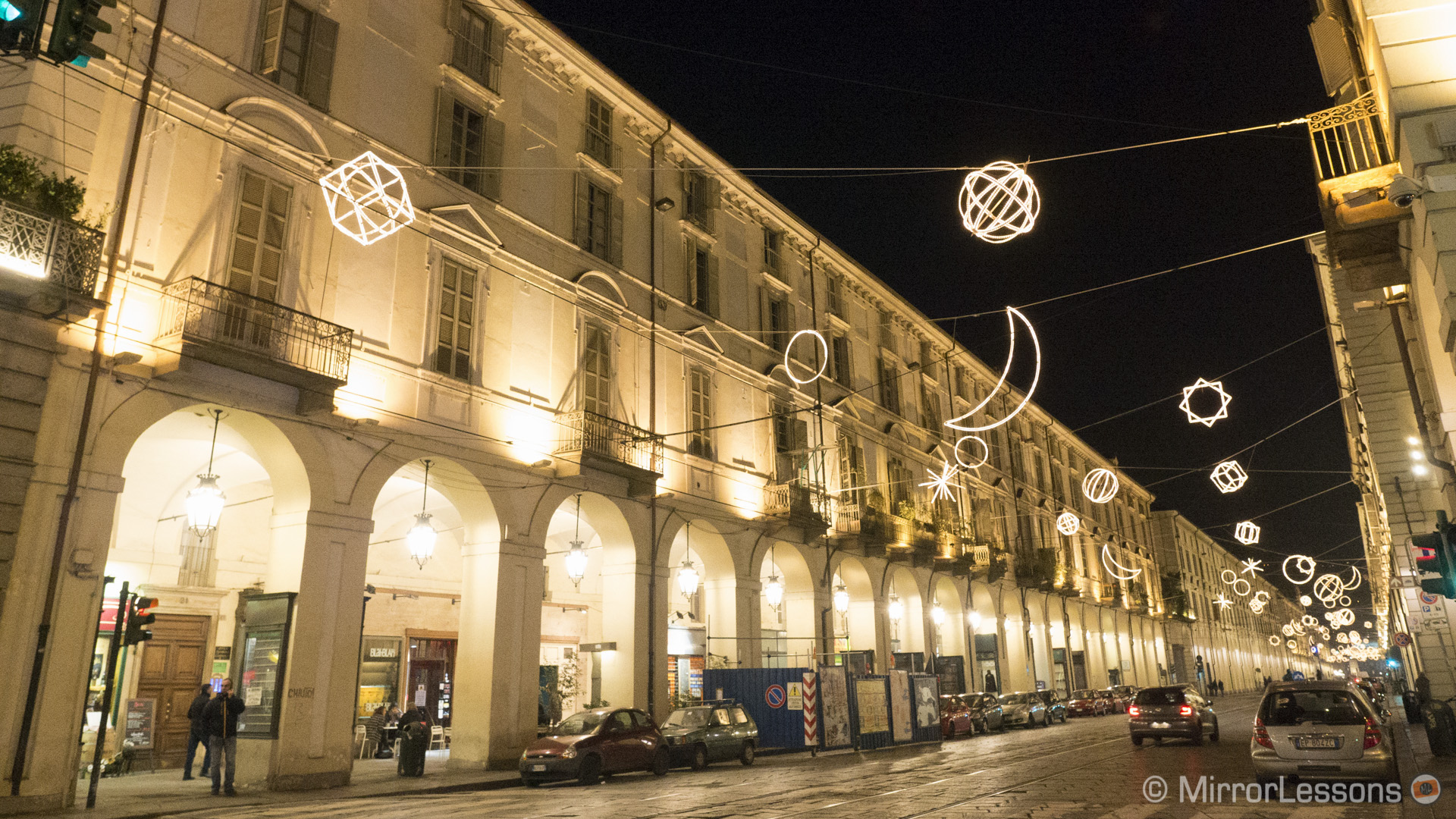
It was just two months shy of Christmas when I first stepped foot in the city that would become my home for the next five years. All I can remember is how overwhelmed I was by the view of Turin at night. The ivory-white of the palazzos and porticoes seemed to shine like beacons against the dark night sky as we drove towards my new Italian home. Even now, I still believe that Turin is at its most stunning after sundown.
For this reason, it is no surprise that the Luci D’Artista (Artist’s Lights) are such a big tourist attraction around the holiday season. For the past fifteen years, the Christmas-themed lights have continued to illuminate the streets and piazzas of Turin between November 1st and January 12th. Every year, a new light is added to the collection, amongst which you’ll see abstract representations of Christmas trees, stars and planets, constellations, snowflakes and more.
Since Mathieu and I had both the Lumix GX7 and Fuji X100s on-hand at the same time, we figured that stepping out to capture the Luci D’Artista would be the perfect opportunity to compare the ISO performance of the two cameras. 🙂
For the test, we chose to remain between 1600 and 25600 ISO. The two cameras were set to the standard profile with white balance locked at 3200 Kelvin. Since we don’t own the M.Zuiko 17mm (35mm equivalent on full frame), we had to settle for the 12mm (24mm equivalent) on the GX7, while the X100s had its 23mm (35mm equivalent) fixed lens. All photos were viewed in and exported directly from Lightroom 5.
Please note that we do these high ISO comparisons for the sheer pleasure of shooting. The images below are not meant to determine which camera is better and in our opinion, these results alone shouldn’t be the determining factor in your decision to buy one instead of the other.
Ice Cream and Christmas Trees: 1600 ISO
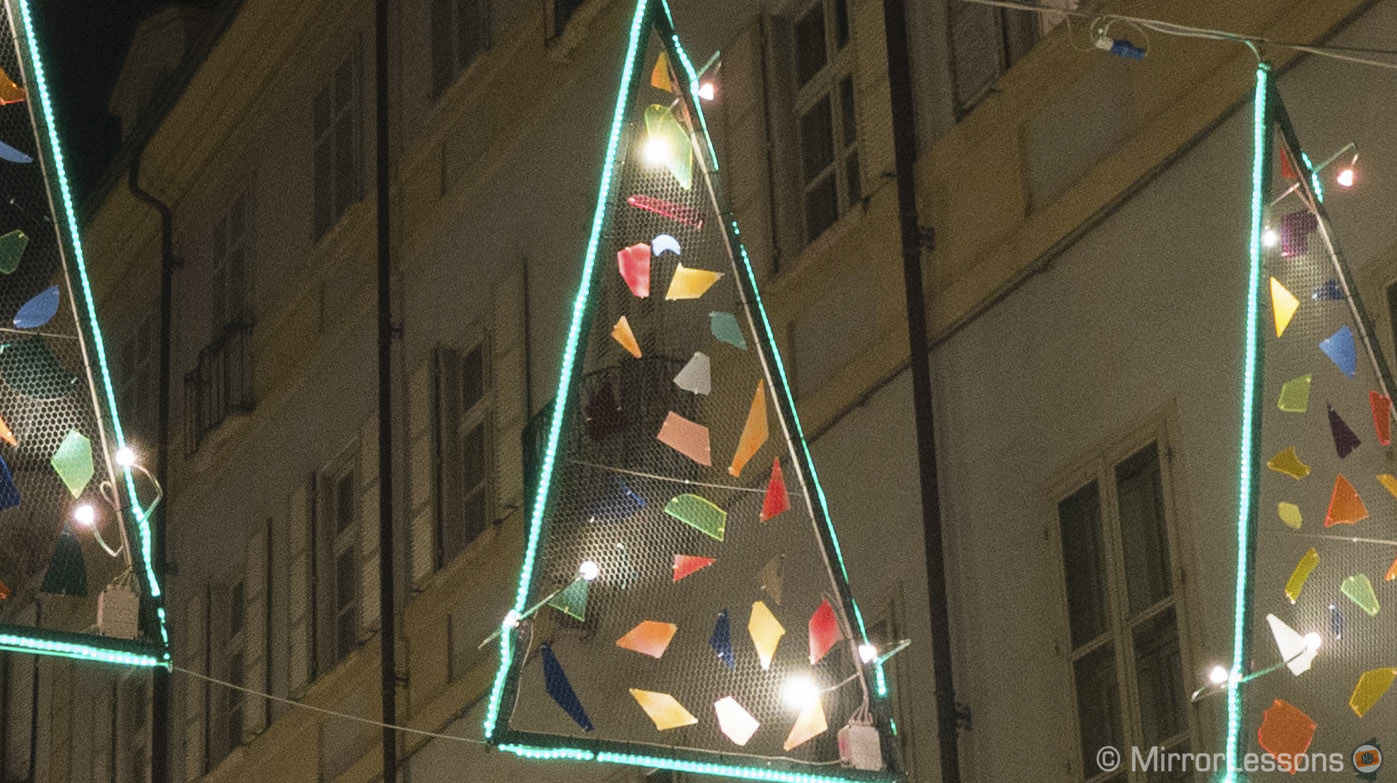
During the first stage of our walk, we came across a new set of lights in Piazza Bodini, the Ice Cream Lights by Vanessa Safavi. For these shots, we set the cameras to 1600 ISO and placed the focus on the statue in the middle of the piazza.

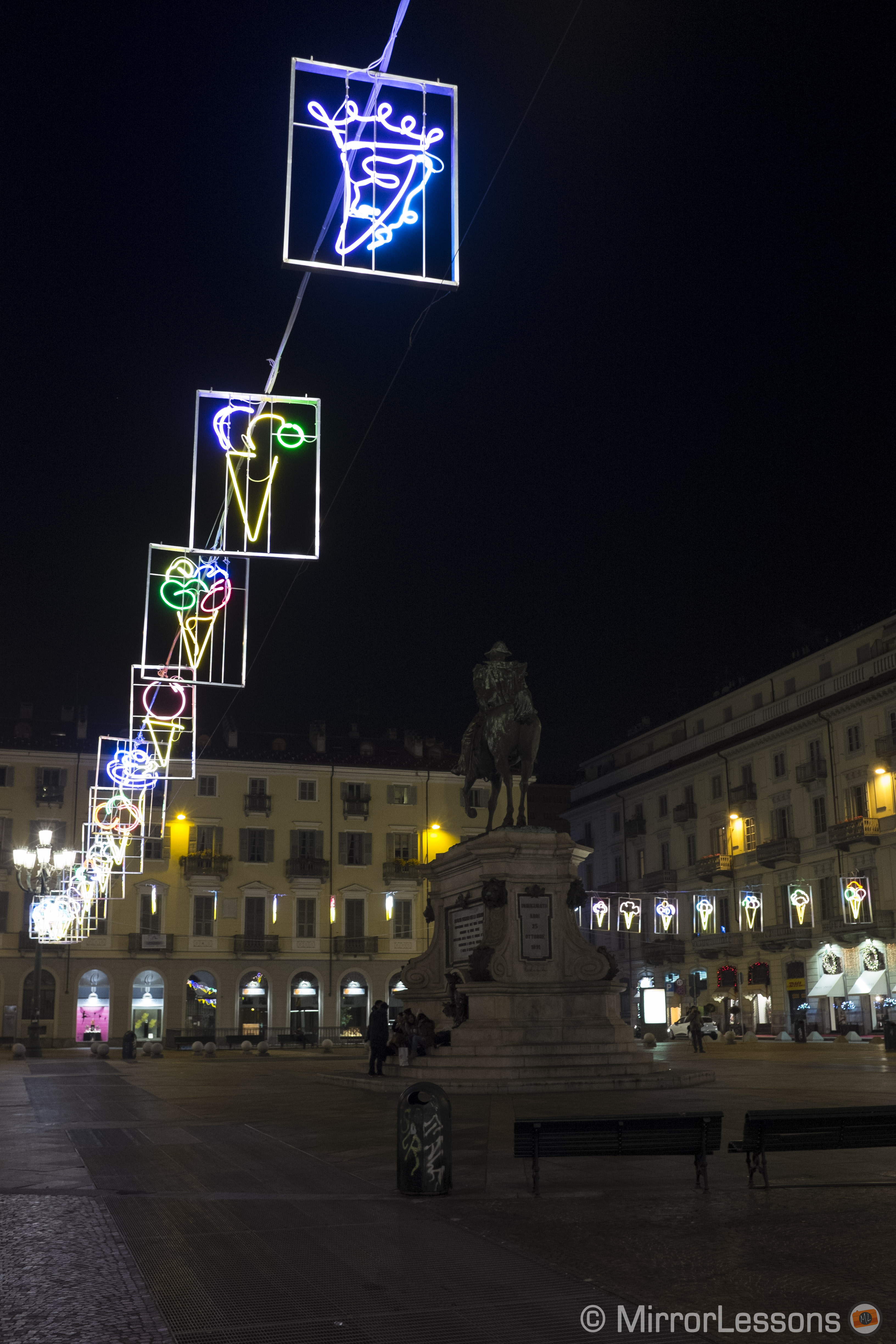
Even at ISO values this low, you can already see the difference between the results produced by the APS-C sensor of the X100s and the Micro 4/3s sensor of the GX7. The crops below show that the GX7 results are more grainy, though anything but unpleasant. (If you don’t like the grain, you can remove it to some degree in post-processing at the sacrifice of some detail.) It appears that detail retention is also slightly better on the X100s, but this could also be related to the different lenses being used.


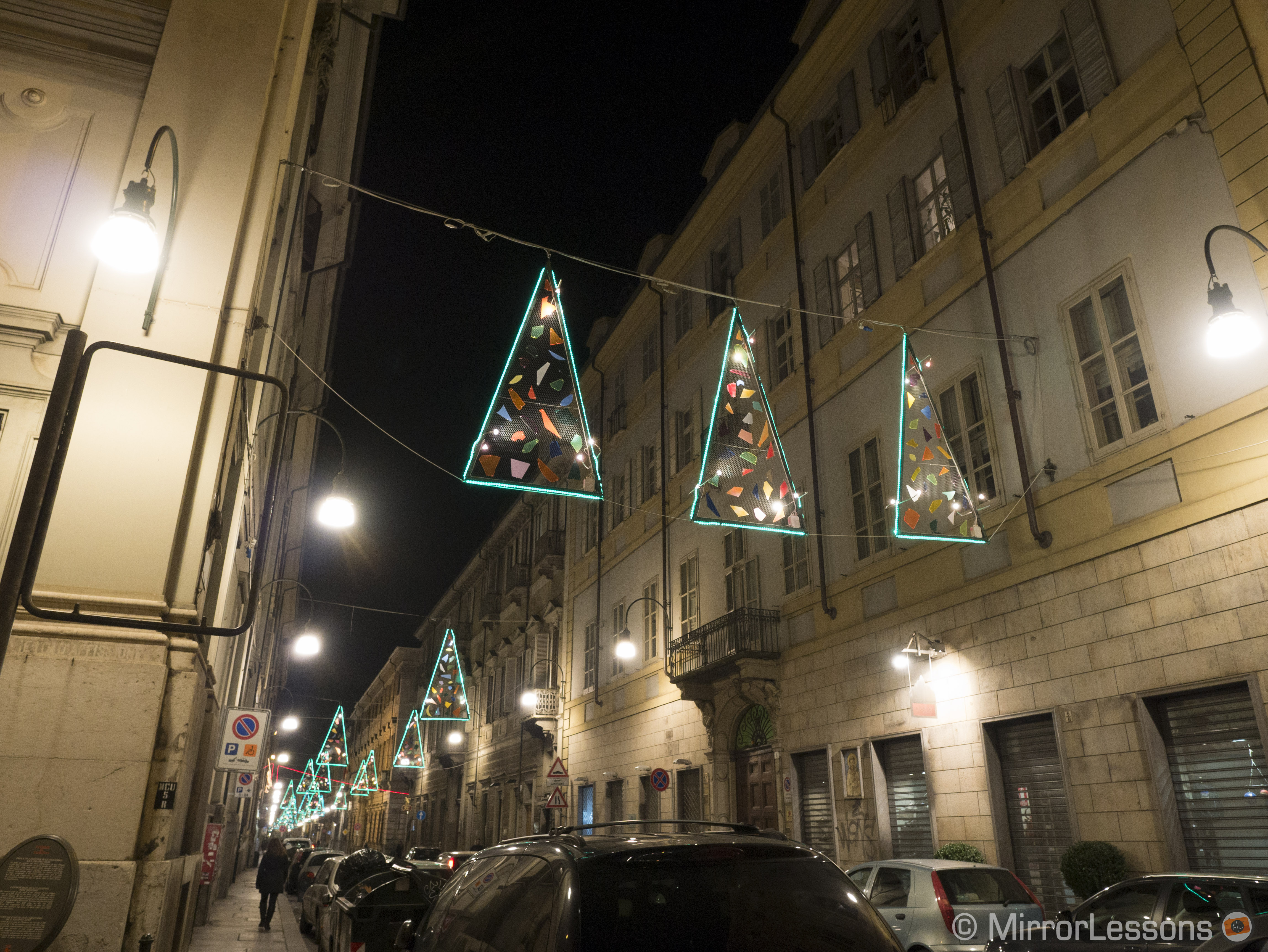
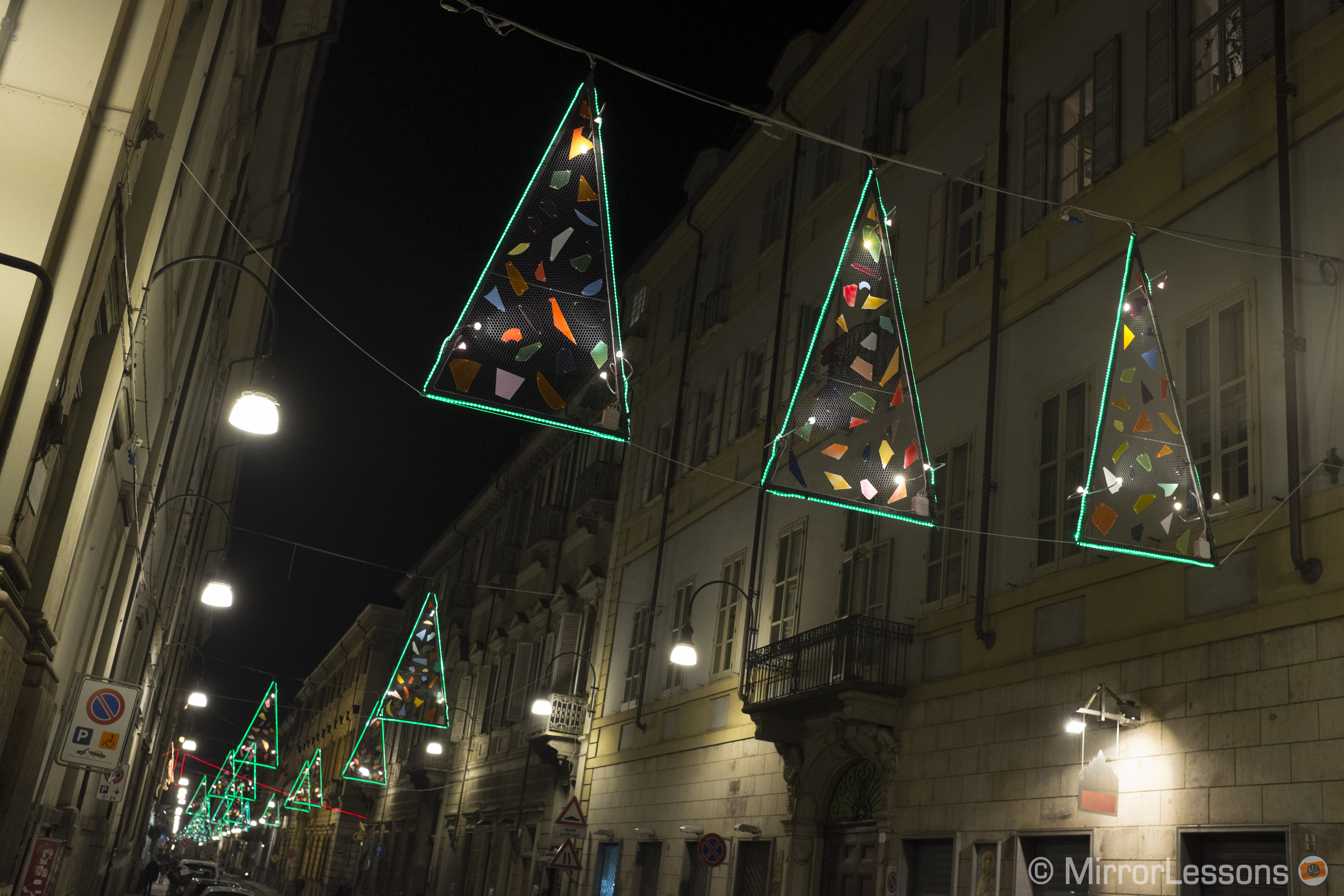
You can see another example of 1600 ISO in the Christmas Tree Light gallery below.

The Christmas Birds: 3200 ISO
Next, we turned towards Via Carlo Alberto where the street was dotted with festive Christmas birds carrying a long red ribbon of light. This particular light has been around since I first moved to Turin. We turned the ISO sensitivity up a notch to 3200 ISO, and this is where the difference between the two became more evident.

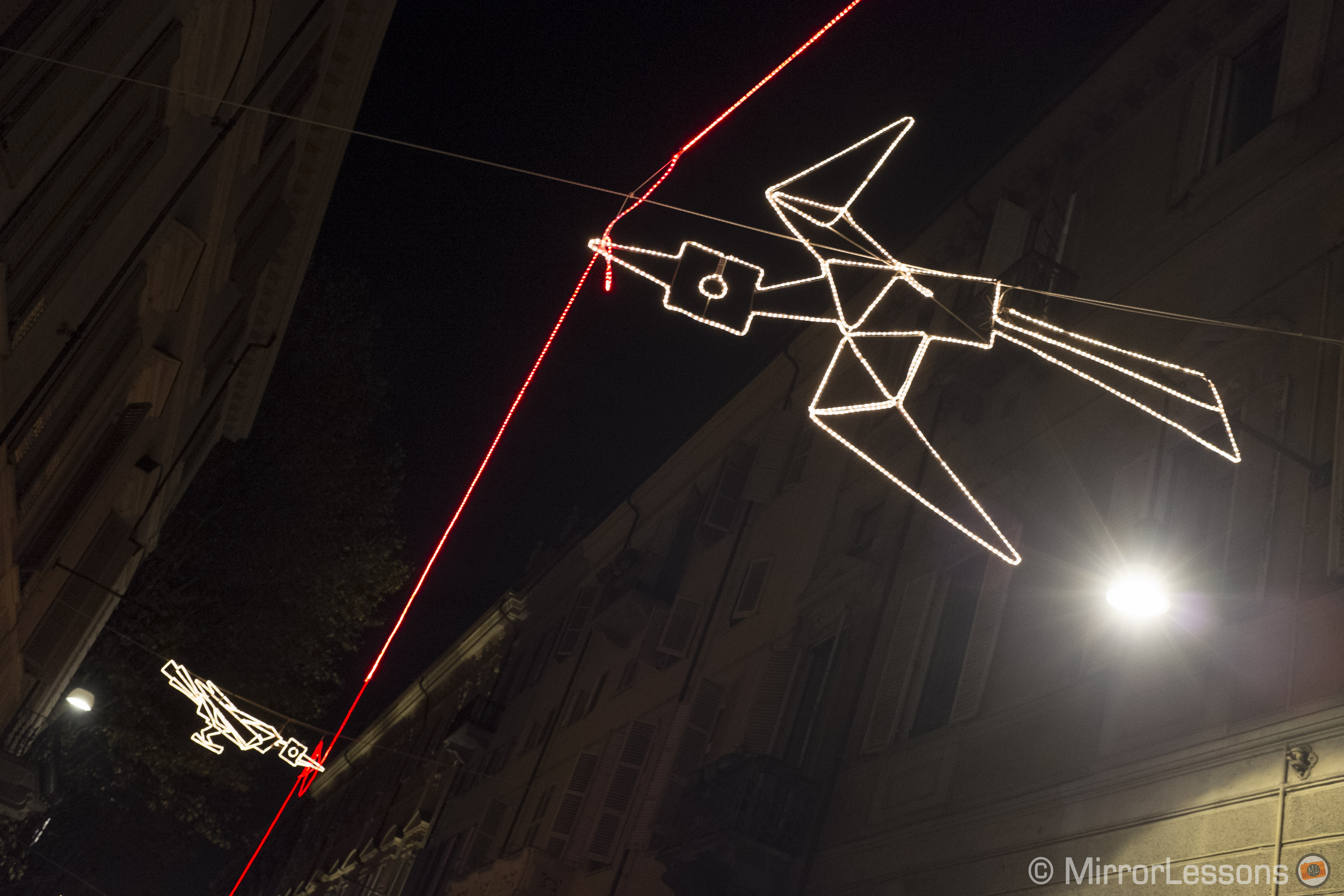
On the GX7, noise is slightly visible against the night sky, and very visible around any light source such as the birds. A halo of fuzzy and grainy light is present around the bird and the red ribbon. The X100s crop, on the other hand, remains very clean even at 3200 ISO. The sky is less noisy and the halo around the bird is almost non-existent.


Below is a second example taken at 3200 ISO of the birds, this time with a Christmas tree included.


Planets and Christmas Story: 6400 ISO
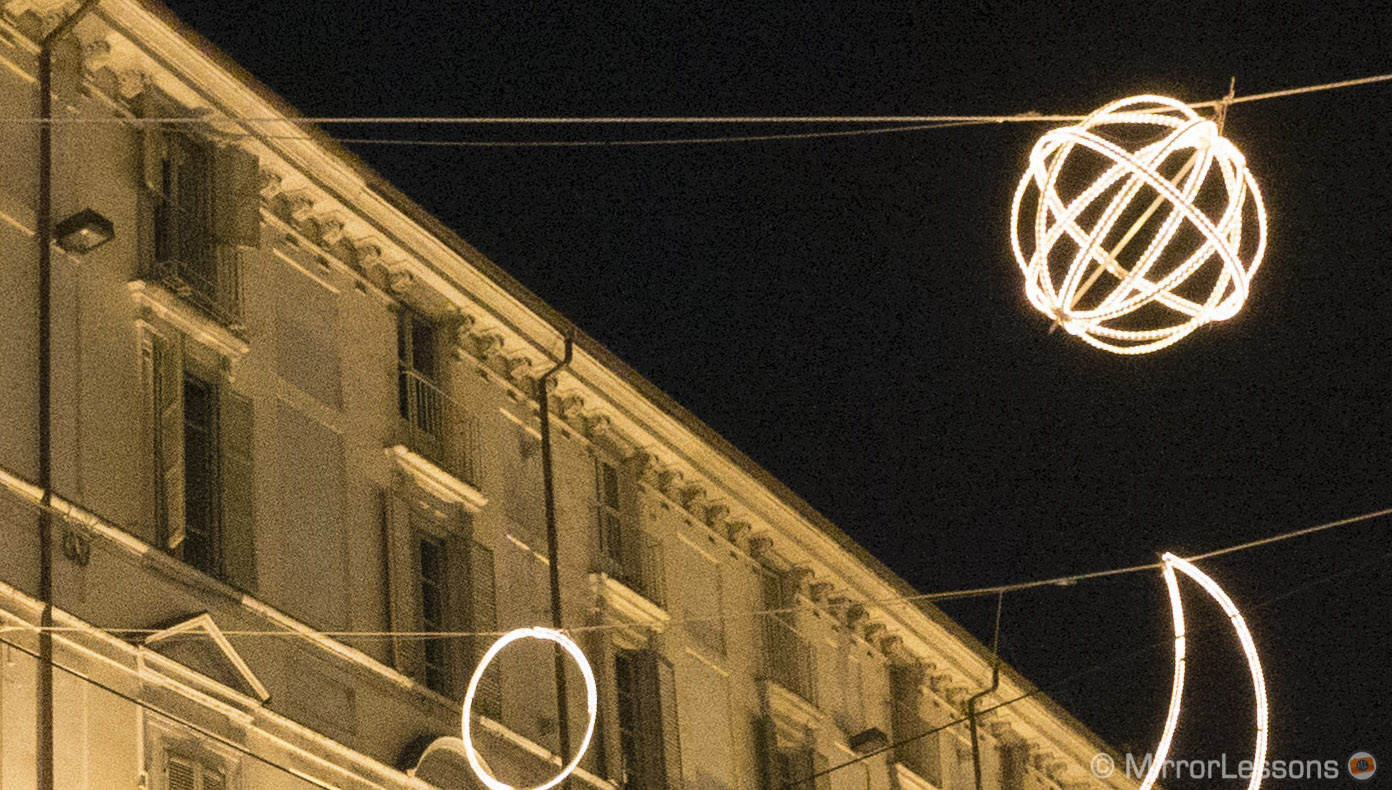
A nip became tangible in the air as we made our way towards Via Po, one of the most important streets in Turin. It is lined from one end to the other by porticoes, requested by King Vittorio Emanuele I who did not want his entourage to get wet on rainy days. In total, there are 18km of porticoes in the city, most of which are directly connected. It is here you’ll find the Palomar lights by Giulio Paolini – a series of stars, moons, and planets.


We switched our cameras to 6400 ISO and our discoveries were far from unexpected. Once again, more grain is visible in the GX7 samples, as well as some loss in detail along the edges of the roof and the iron balconies. The X100s at this ISO value retains more detail than the GX7 and produces less noise, though a sprinkling of grain is now visible in the night sky.

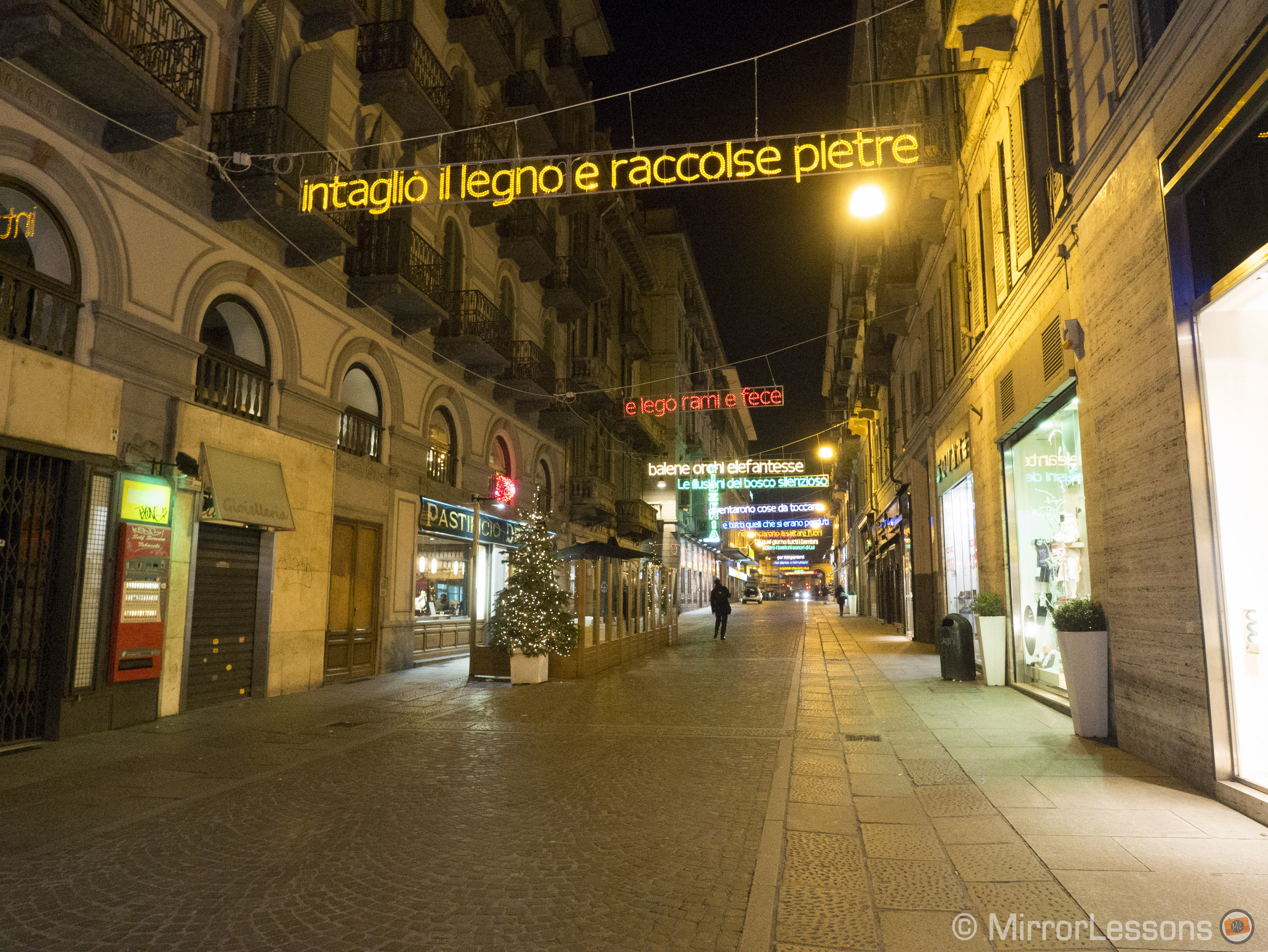
Soon after, we backtracked towards Via LaGrange where the lights entitled “Luì e l’arte di andare nel bosco” can be found. These lights are a Christmas story laid out stanza by stanza which you can read as you walk along the street. Here, too, we used 6400 ISO and the results are the same.


The Constellations: 12800 and 25600 ISO
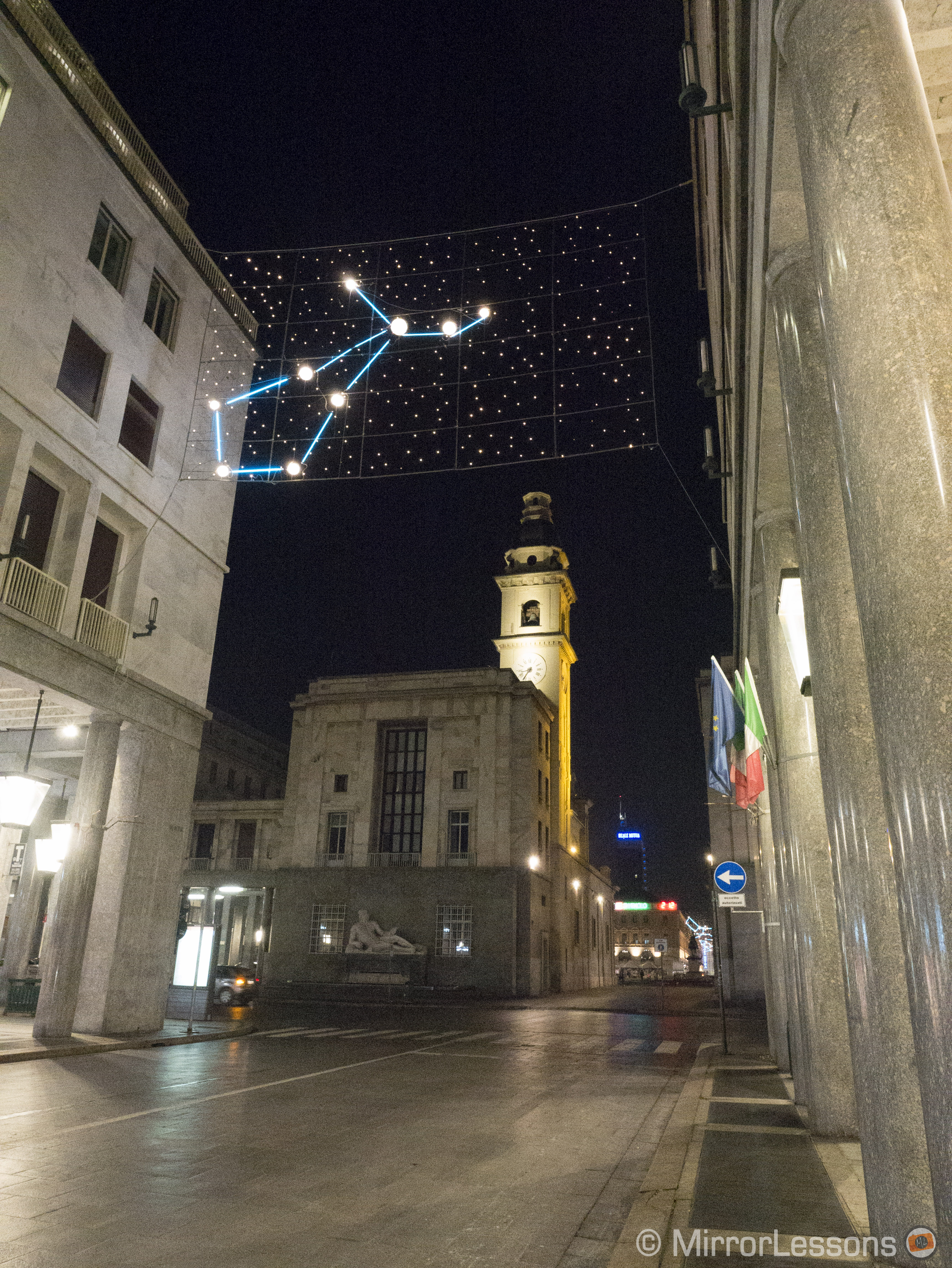
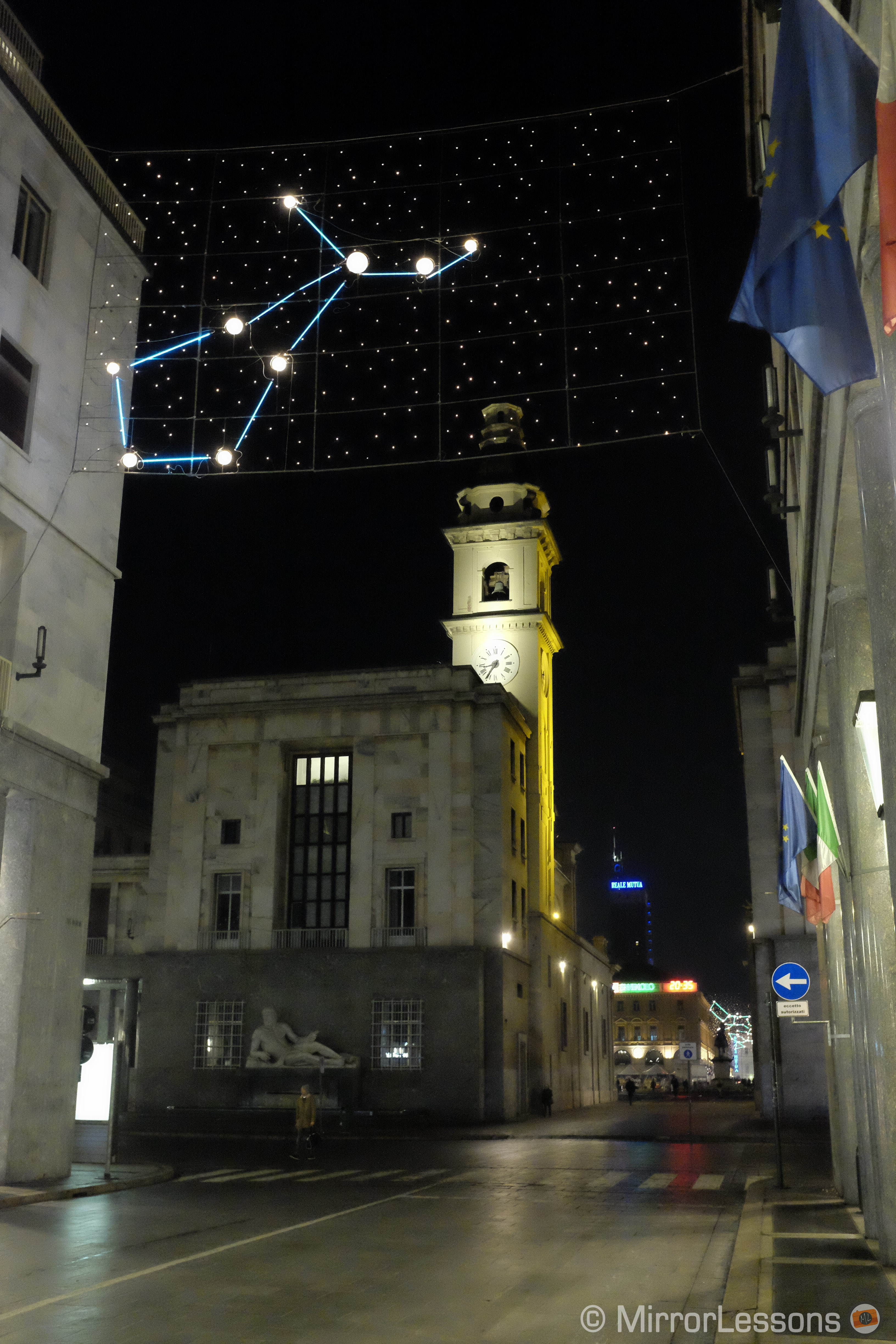
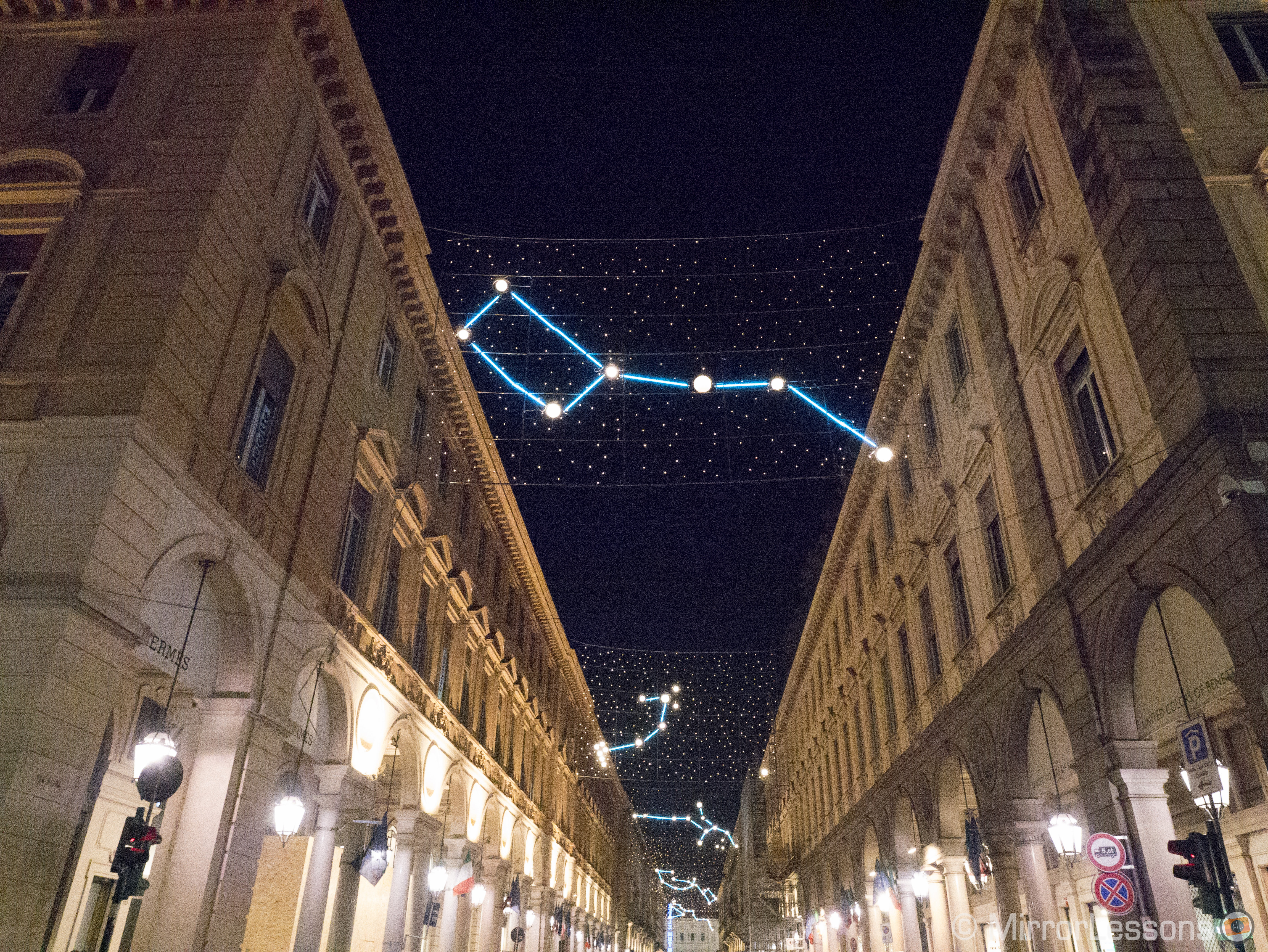
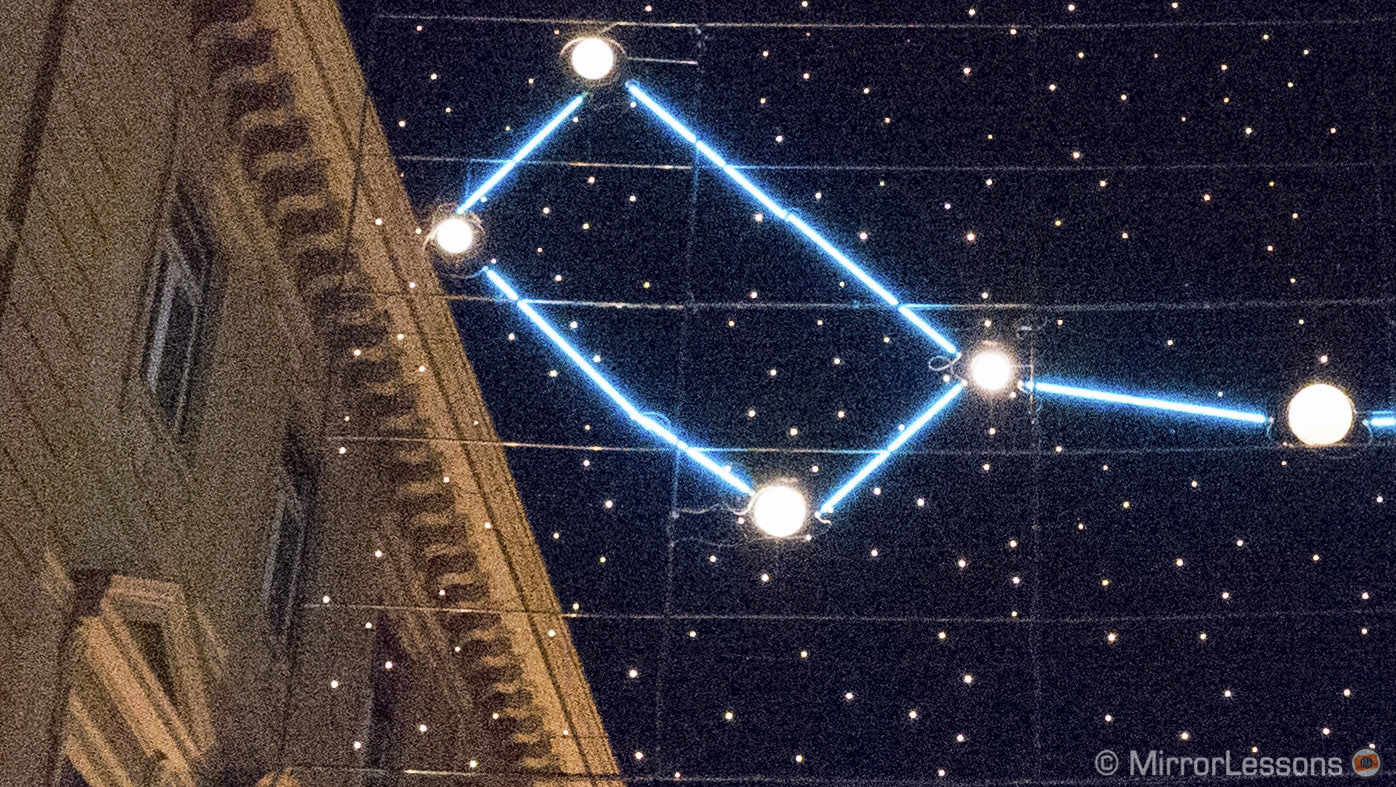
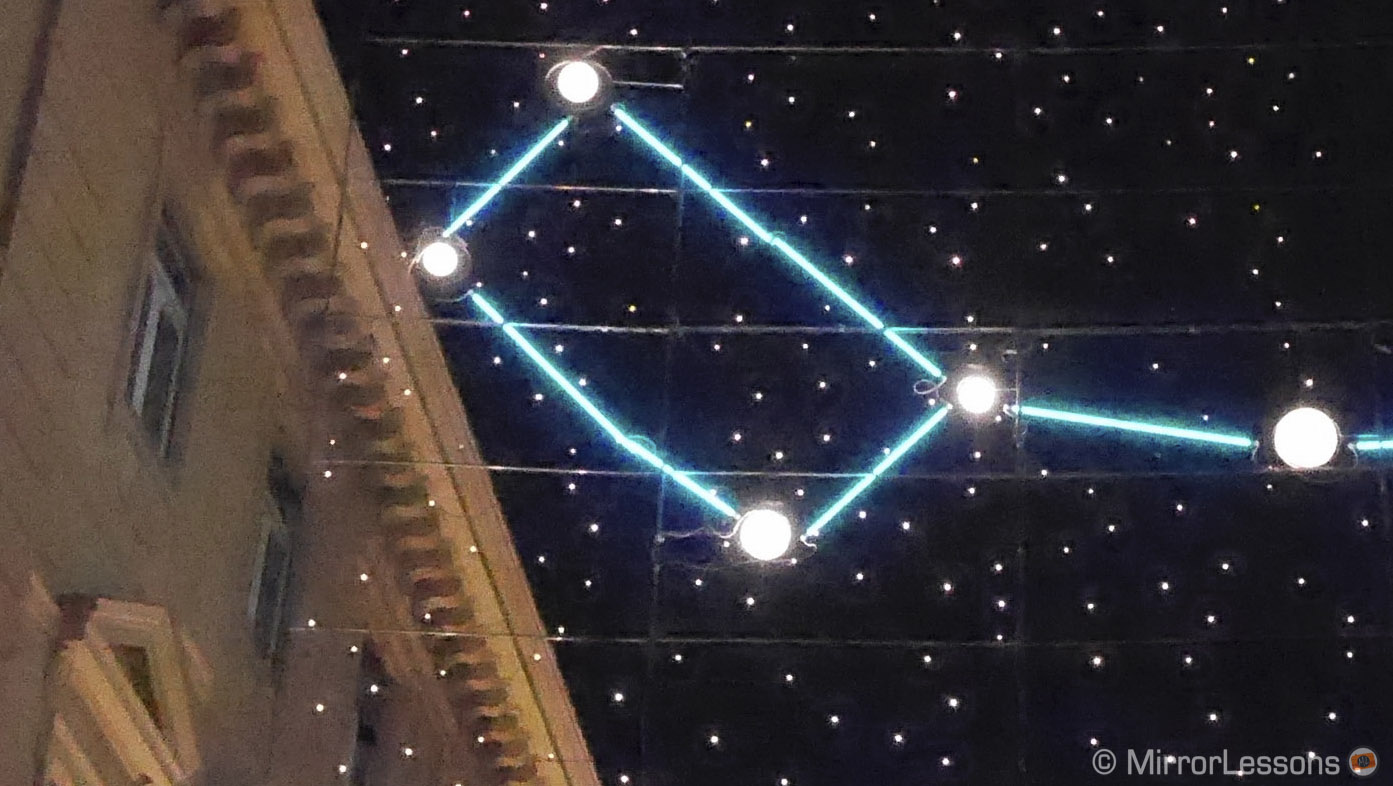
The ‘Planetario’ lights by Carmelo Giammello are some of the prettiest in the collection. Featuring all the most important constellations in the sky, they take their rightful place along Via Roma, the shopping high street of Turin. It almost seemed like a shame to use 12800 ISO to capture them!
At 12800 and 25600 ISO, the X100s does not generate raw files so all comparisons had to be conducted between the out-of-camera (OOC) JPG files. However, I have still included the raw files from the GX7 so you can see the difference the JPG engine makes to the images.
N.B: noise reduction was set to standard on the GX7, to 0 for the X100s.

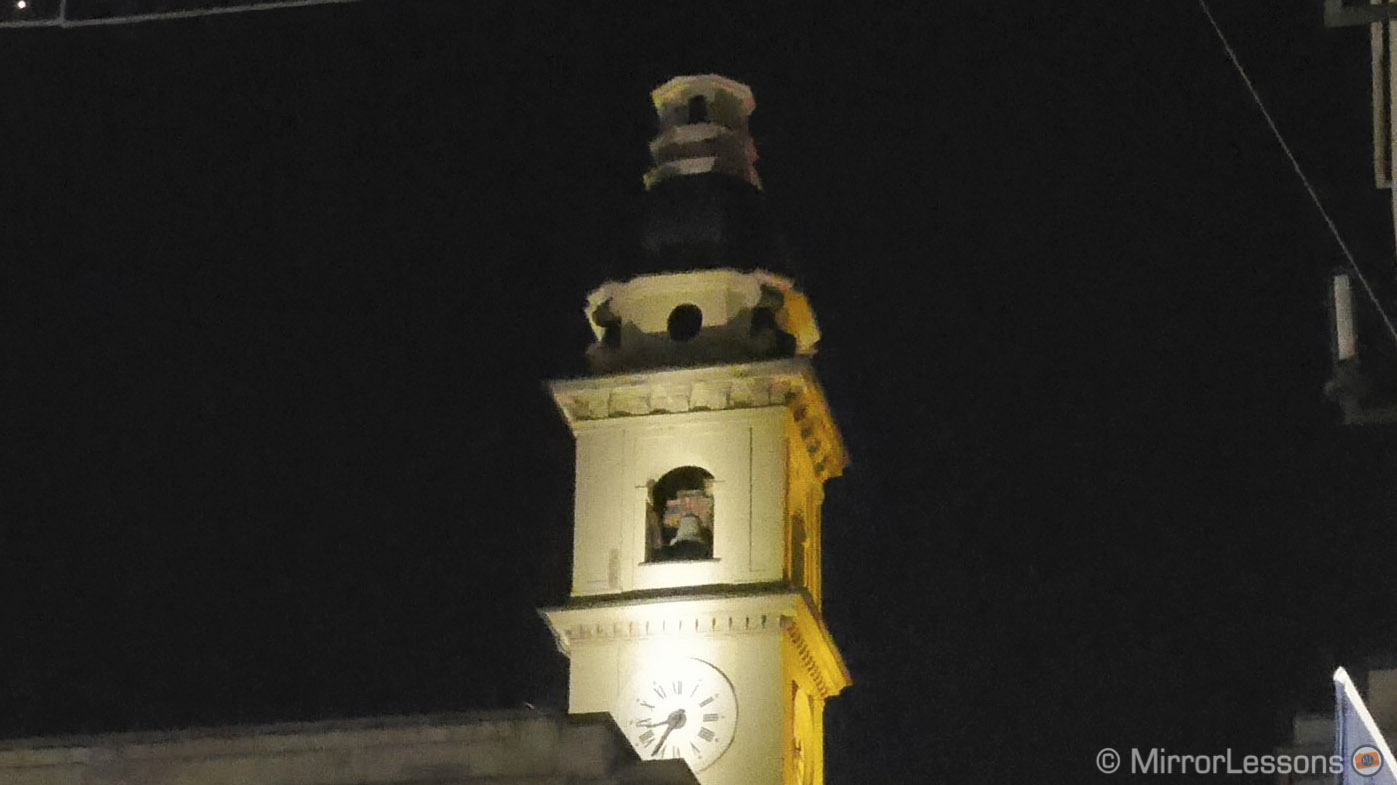
If we look strictly at the JPG crops, we can see that the GX7’s JPG engine has zapped all grain from the images, leaving you with what looks like an impressionist painting! The loss of detail is quite evident especially when compared to the JPG produced by the X100s, which despite some loss in detail, is still quite crisp. The raw file from the GX7, on the other hand, looks like it has been sprinkled with salt when looked at closely. Interestingly, the outline of the black roof of the church steeple is vaguely visible in both GX7 examples, but completely blends in with the night sky in the X100s example.

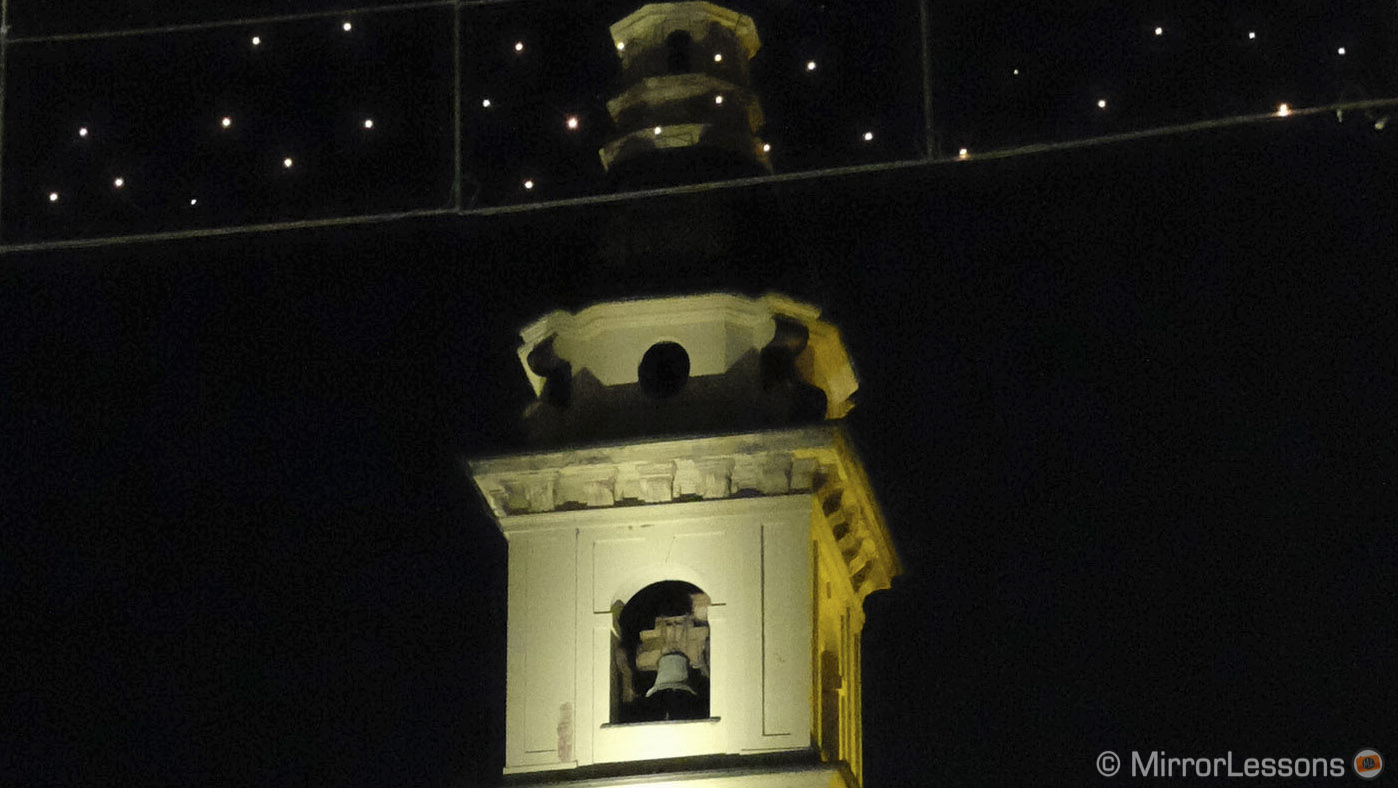
Moving up to 25600 ISO, the differences are stark. The GX7 raw file continues to look extremely grainy, and the OOC JPG looks almost blotchy compared to the rather uniform-looking X100s OOC JPG. Of course, loss of detail at this ISO value is evident in all examples.



So, after a long walk around the town and a half-a-dozen pretty lights, we can come to the conclusion that the Fuji X100s performs better than the GX7 in low light at high ISO. The difference is evident even as low as 1600 ISO, but becomes truly pronounced at 6400 ISO and above.
It is also true that for many of those examples, you need to view them at 100% magnification to really see the difference. And photography isn’t about that so, hair-splitting aside, I would say that both cameras perform really well. The question we should really be asking is: are the high ISO images from both cameras useable?
When I look at most of these images at a distance, all with the exception of 25600 ISO, I feel they are perfectly acceptable for online use. (And in all honesty, most of my images live out their entire existence online anyway, without ever seeing the light of photographic paper, so I have little to worry about with regards to IQ.) If I were to print them, I would certainly be more picky. I probably wouldn’t use an ISO higher than 3200 on the GX7 (minimal grain doesn’t bother me), whereas on the X100s, I would trust the camera up to 6400 ISO.
I hope you enjoyed your tour of the Luci D’Artista seen through the viewfinder of the GX7 and the X100s!
