• Skip to main content
  • Skip to primary sidebar
  • Archive
    • Camera Reviews
    • Lens Reviews
    • Accessory Reviews
    • In-Depth
    • Galleries
    • Guest Post
  • About Us
  • Our Websites
  • Contact Us
  • Privacy Policy
  • Youtube

MirrorLessons

Mirrorless camera reviews right at your virtual doorstep!

Heather

Luscious in Leather – Review of DeadCameras wrist, neck and shoulder straps

26/01/2015 By Heather

I’ll be honest–we rarely dislike the neck and wrist straps we test here at MirrorLessons. I would guess that this is because most of the products we test have been around for a while, and have thus already been tweaked to near perfection. Very rarely do we get the chance to try products from up-and-coming accessory producers, but this was exactly what happened with DeadCameras, a small company from Portugal that only just started making leather camera straps last year.

[Read more…] about Luscious in Leather – Review of DeadCameras wrist, neck and shoulder straps

Filed Under: Accessory Reviews, Straps

6 Authors of Mirrorless Camera Manuals Whose Books You’ll Actually Enjoy Reading

21/01/2015 By Heather

I am generally an avid reader but there is one genre of literature that sends me running in the other direction: official camera manuals. A few pages into reading one, and I can feel my eyelids becoming heavy and my mind beginning to wander to thoughts as varied as that evening’s dinner and the meaning of life.

E-M1, 1/30, f/ 28/10, ISO 400
Me “enjoying” some fine literature!

Thankfully there are a handful of authors who have taken on the task of publishing thorough, accurate and interesting camera manuals of their own. Not only are these manuals just as informative as the manufacturer’s version (if not more), but they are usually written in the first person by an actual photographer who has used the camera in various situations and can share personal tips on how to get the most out of that particular model.

In this article, you will find six authors of mirrorless camera manuals whose writing I’ve sincerely enjoyed reading. These books may not be as riveting as The Lord of the Rings but they are certainly far more digestible and helpful than the one currently sitting in your camera box.


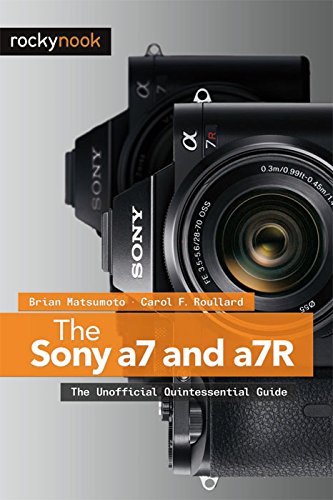
Brian Matsumoto & Carol Roullard

brian matsumoto carol roullard

Unlike the other authors mentioned here, Brian Matsumoto and Carol Roullard always work together to create their camera manuals. Whereas Brian comes from a primarily scientific background, having recorded experiments with film and digital cameras for over 30 years, Carol is a fine art, landscape and architectural photographer with a background in IT. Together, they consistently create manuals that are detailed, extremely well-organised and approachable.

Having read their Sony A7/A7r manual from cover to cover, my impression is that their manuals are particularly appropriate for experienced photographers, which makes sense as most of their books deal with mid-to-high end mirrorless cameras. With that said, they do make a point to cover the basics of photography (aperture, shutter speed, ISO, exposure compensation, etc.) at the beginning of the book for the sake of beginners and those in need of a refresher, and do not hesitate to explain even the most banal of concepts, such as reviewing or deleting your photos for example. If you are already familiar with these concepts, it is simply a matter of skipping to the sections that interest you.

, , f/ , ISO
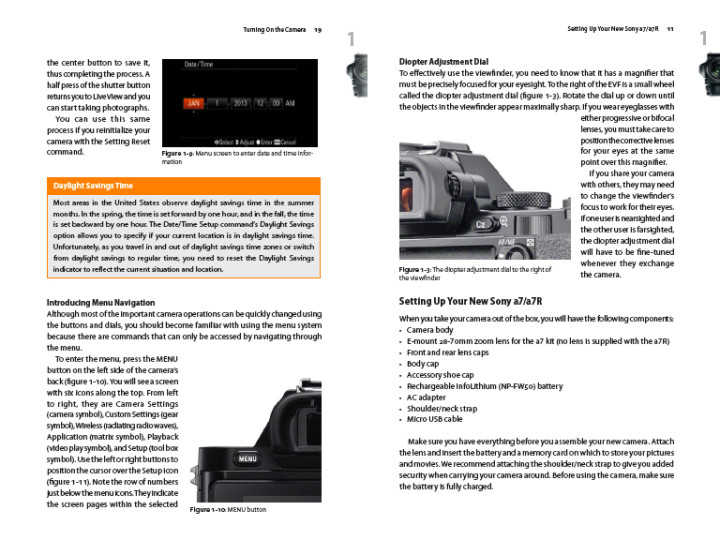
Two pages from their A7/A7r book

A section I enjoy is entitled ‘Recommendations’ found at the end of each chapter. Here, the authors share personal tips and recommendations gathered from their own experience using the camera. You’ll also find useful tips highlighted in orange tables sprinkled throughout the book.

A great strength of their manuals is that they don’t simply list the functions of the camera like an ordinary manual. Rather, they make a point to describe what works well, what doesn’t, what users have complained about, how these issues can be resolved, and finally, how the brand in question can improve future models. The word “thorough” is an understatement.

If I could make one small criticism, it is that the authors sometimes have the tendency to be too verbose, causing confusion for beginners. A few more images taken with the camera in question would also help to break up the long streams of text.

Brian and Carol’s manuals are all available as paperback or e-books on Rocky Nook.

Below you can see a full list of mirrorless camera manuals they’ve written:

All MirrorLessons readers are entitled to 15% off all e-book orders from Rocky Nook. Simply include the coupon code “mirror lessons” in your order!

  • Sony A7/A7r – Rocky Nook
  • Sony NEX 6 – Rocky Nook
  • Sony NEX 7 – Rocky Nook
  • Panasonic Lumix GH2 – Rocky Nook
  • Panasonic Lumix GH4 – Rocky Nook
  • Panasonic Lumix G2 – Rocky Nook

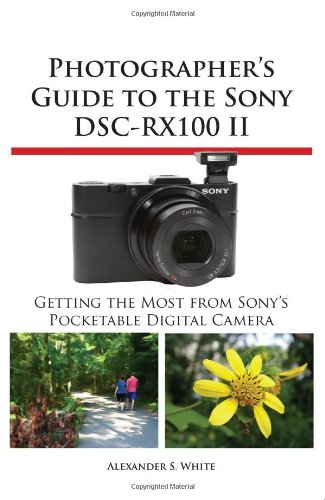
Alexander S. White

alexander s white

If I had to name one thing I really like about Alexander S. White’s manuals, it would be his writing style. Not only are the books well-organised and easy to follow, but the author also has a real knack for explaining concepts in the simplest terms possible, partially owing to his non-technical and friendly manner. It almost feels as if you are chatting to him over a cup of coffee. For this very reason, Alexander’s manuals make an excellent starting point for beginners and more experienced photographers alike.

To write this list, I was given a copy of the RX100 II manual. Although Alexander does not include tip boxes throughout the book, his writing is littered with personal experience, which is complemented by some examples of his own photography. He uses many real life examples to explain when you should and shouldn’t use certain functions, and when explaining the settings, follows the original order of the default camera menu.

, , f/ , ISO
Two pages from the Sony RX100 II book

Unlike other authors, Alexander starts off the manual with the ideal settings for the complete beginner, indicating exactly which shooting mode to use and what to adjust in the menu. This means that by the end of Chapter 2, the beginner is already primed to shoot.

The end of the book is equally useful, with two extremely detailed sections about Accessories and the author’s Quick Tips for getting the most out of the camera. The latter is basically a condensed summary of all the tips he’s mentioned throughout the book.

I would have personally liked to see more of his personal image collection but the props he uses for his example images (figurines for DOF and macro, mannequins for portraits and flash, etc.) demonstrate the concepts of photography very well.

So far, Alexander has written eight manuals about premium compacts* including the three RX100 series cameras, the X100 series and most recently, the LX100. He also runs a website, White Knight Press, where you can purchase his books.

*We define premium compact as any mirrorless camera with a sensor equal to or larger than 2/3-inch.

Below you can see a full list of mirrorless camera manuals written by Alexander:

  • Sony RX100 – White Knight Press
  • Sony RX100 II – White Knight Press
  • Sony RX100 III – White Knight Press
  • Sony RX10 – White Knight Press
  • Fujifilm X100 – White Knight Press
  • Fujifilm X100s – White Knight Press
  • Fujifilm X10 – White Knight Press
  • Panasonic Lumix LX100 – White Knight Press

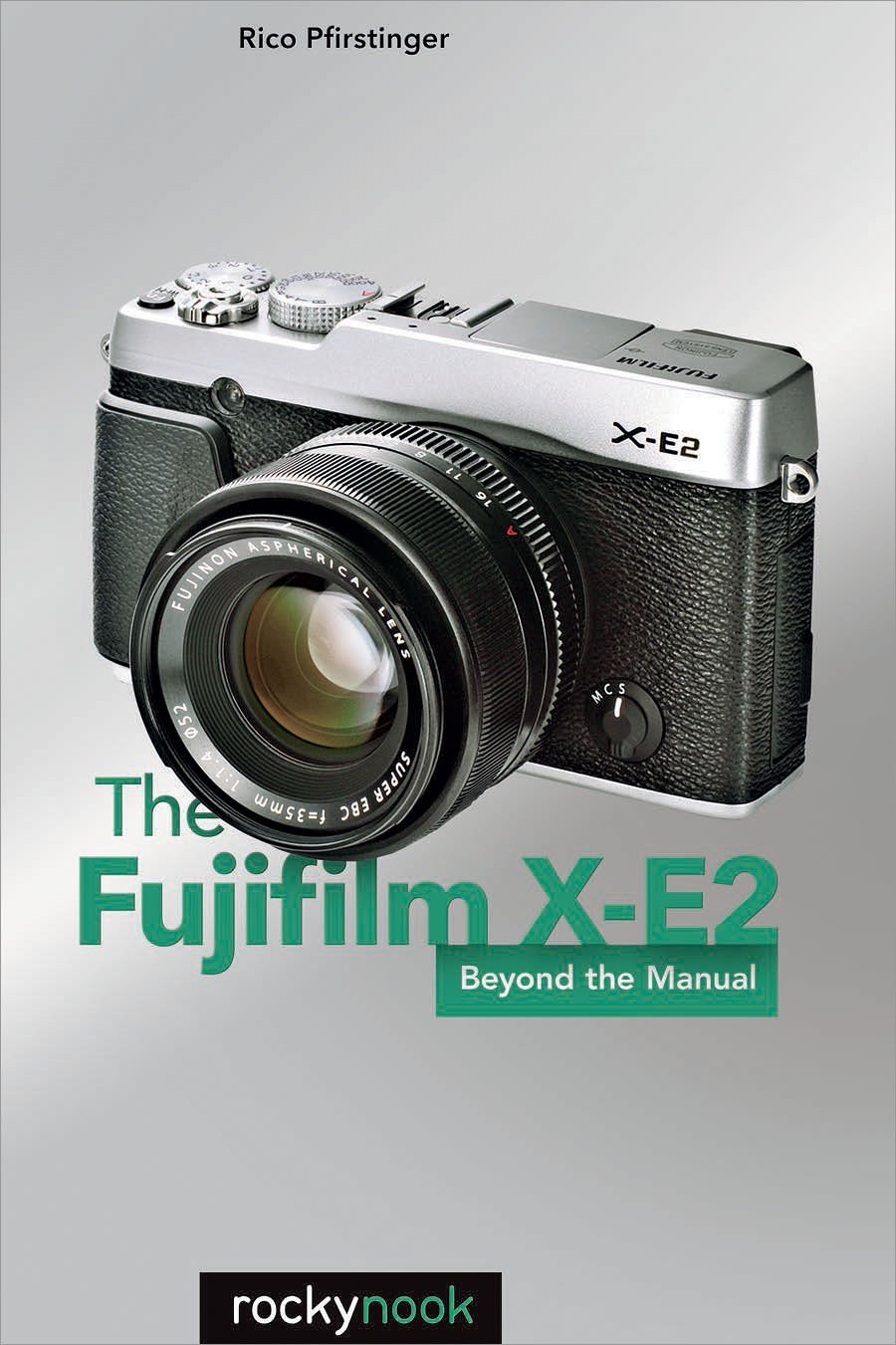
Rico Pfirstinger

Rico Pfirstinger

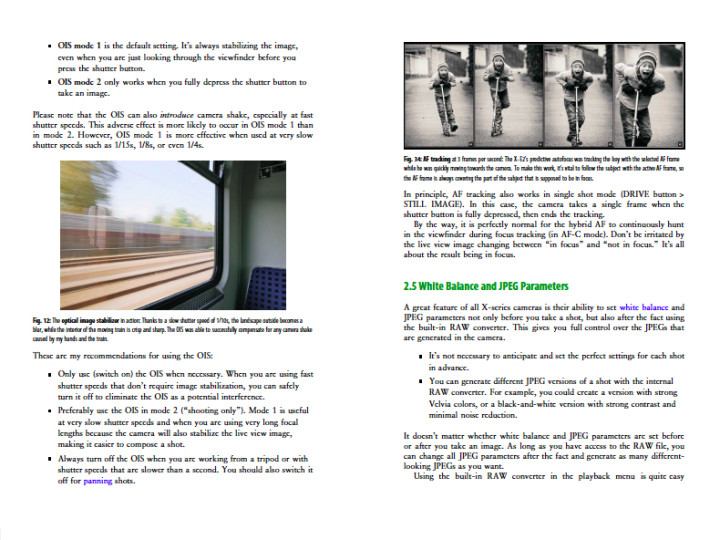
Rico Pfirstinger is a journalist, publicist and photographer. Compared to other authors, he definitely takes a more casual approach to writing his more recent camera manuals, preferring to share a list of 100 useful tips for those who have already read the official manual than detail every minute aspect of the camera in question. (Only his first two manuals about the X-Pro1 and X-E1 were complete in the sense that they covered all aspects of the two cameras.) Each tip is divided into a series of bullet points for easier reading. Whilst this style isn’t great for beginners, it is perfect for experienced photographers who want to get the most out of their new camera.

, , f/ , ISO
Two pages from the Fuji X-E2 book

Rico strictly talks about mirrorless cameras from Fujifilm, and his experience with these cameras shines through in his exhaustive though sometimes very technical descriptions. He goes into particular detail about lenses, Raw processing in-camera, JPGs, ISO and DR in the X-E2 manual I was given to review.

Another great thing about Rico’s books is that he frequently links to external resources on the web throughout the book so the reader can find out more about a topic that interests him or her. Doing so keeps the book relatively short and clear of superfluous information.

You can also read Rico’s excellent reviews and first impressions articles in his X-Pert Corner featured on Fuji Rumors.

Below you can see a full list of mirrorless camera manuals written by Rico:

All MirrorLessons readers are entitled to 15% off all e-book orders from Rocky Nook. Simply include the coupon code “mirror lessons” in your order!

  • Fujifilm X-Pro1 and X-E1 – Rocky Nook
  • Fujifilm X-Pro1 – Rocky Nook
  • Fujifilm X-E2 – Rocky Nook
  • Fujifilm X-T1 – Rocky Nook

, , f/ , ISO


Gary L. Friedman

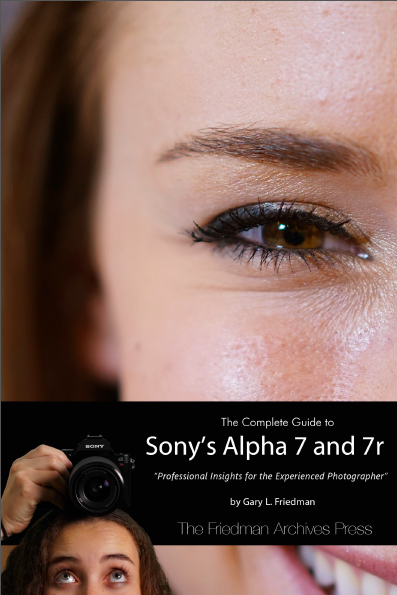
The cover of the book

You may recognise Gary’s name as I have already written a dedicated review of his Sony A7/A7r manual. Originally a rocket scientist for NASA, during which time he patented the image authentication system used by Nikon and Canon, he later graduated to photography (with a primary focus on his stock image website FriedmanArchives.com) and has since been featured in various magazines, newspapers and books worldwide.

As I mentioned in my first review, Gary has a very approachable and conversational writing style which is easy to follow, even if your photography experience is limited. Though his books might be a little confusing for complete beginners, they are well-suited to enthusiasts, advanced amateurs and professionals. (This makes sense as most of his books deal with mid-to-high end mirrorless cameras anyway.)

Gary’s books are also some of the longest I’ve read but there is a good reason for this–the manuals are overflowing with gorgeous imagery from the author’s personal collection and diagrams that explain important concepts. Not only do these images break up the text but they show the reader just what the camera is capable of in the right hands.

, , f/ , ISO
Two pages from Gary’s A7/A7r book

Like many of the other authors mentioned here, Gary also uses Tip boxes to highlight important points throughout the book, which deal with topics such as useful shortcuts, optimal button configurations or workarounds for tricky issues. Likewise, he includes many links to external resources so that the reader may deepen his or her knowledge about a given topic.

Depending on the camera, Gary occasionally collaborates with other experienced professionals in the field on his books. These authors include Mike Hendren, Ross Warner, and Tony Phillips, the latter who is the final author on our list.

If you are looking for an extremely thorough and straightforward manual about your camera, you can’t get much better than Gary Friedman’s line of books.

Note: I have read that the Kindle version of his books do not display well. It is best to download the PDF or order a hard copy. 

Below you can see a full list of mirrorless camera manuals written by Gary:

  • Sony A7/A7r – Friedman Archives
  • Sony a6000 – Friedman Archives
  • Sony NEX 3, C3 and 5N – Friedman Archives
  • Sony NEX 5R, 5T and 6 – Friedman Archives
  • Sony NEX 7 – Friedman Archives
  • Sony RX100 – Friedman Archives
  • Sony RX100 II – Friedman Archives
  • Sony RX100 III – Friedman Archives
  • Olympus OM-D E-M1 – Friedman Archives

Tony Phillips

tony phillips

Last but not least, we have author Tony Phillips, a photographer, writer, pilot and teacher who publishes extensive manuals about Fujifilm cameras on the Friedman Archives website.

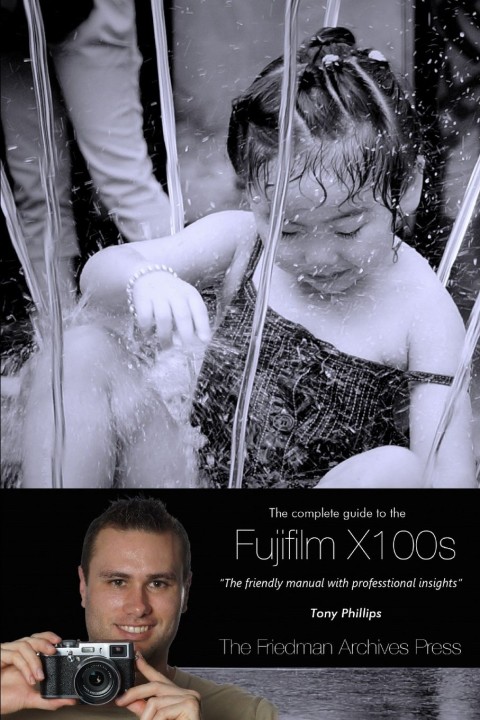
Given that Tony’s books are part of the Friedman Archives, they follow pretty much the same format as Gary’s books, including many useful yellow Tip boxes, links to external resources scattered throughout the text, dozens of beautiful images the author has taken himself and helpful diagrams to explain difficult concepts. It immediately becomes evident as you begin reading his manuals just how knowledgeable Tony is, not just about Fujifilm cameras, but about the art of photography as a whole.

Since Tony assumes that, as an X100s or X-T1 user, you are already an experienced photographer, he does not dedicate any time to discussing the basics of ISO, f/stops, shutter speeds, or light and composition, and does not hesitate to dive right into technical explanations. He does however include an Appendix at the end for those who need to review.

, , f/ , ISO
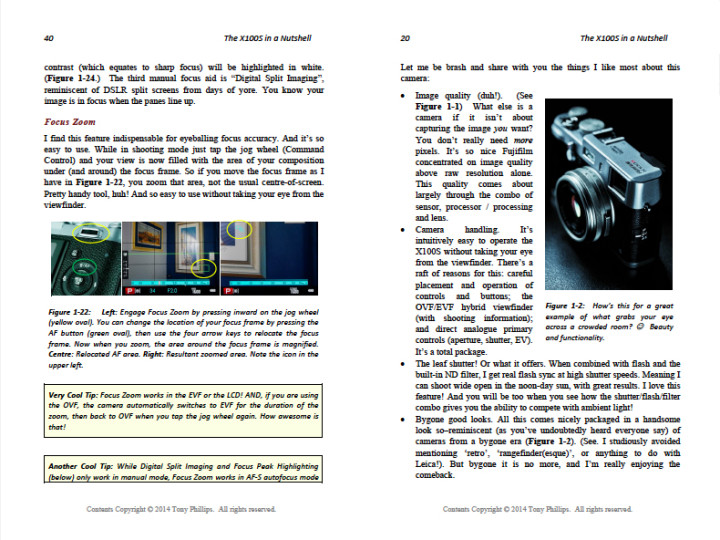
Two pages from Tony’s X100s book

One small point that readers will either love or hate is Tony’s extremely informal writing style. He tends to write as he might speak, which makes for easy reading on one hand, but can also be somewhat bothersome when overused, such as when one paragraph contains a handful of bracketed sentences, exclamation marks and emoticons. That said, it doesn’t happen too often and given the very technical nature of his explanations, it does become necessary to “lighten the mood” at times.

I would definitely recommend either of Tony’s Fujifilm books to users who have significant experience in the photography world, particularly those who have just switched over to a mirrorless system from a DSLR.

Below you can see a full list of mirrorless camera manuals written by Tony:

  • Fujifilm X-T1 – Friedman Archives
  • Fujifilm X100s – Friedman Archives
  • Fujifilm X100t (coming soon)

Have you read a mirrorless camera manual by one of these authors? How about an author we haven’t mentioned? If so, let us know in the comments section below!

Filed Under: Best Of, Best Of - Books, Book Reviews

Panasonic announces the Lumix GF7, taking selfies to a whole new level

20/01/2015 By Heather

If recent events are any indication, 2015 will be the year of the entry-level selfie camera. To kick off the trend, we saw the announcement of the Fujifilm X-A2 on January 15th, which was followed by today’s announcement of the Panasonic Lumix GF7.

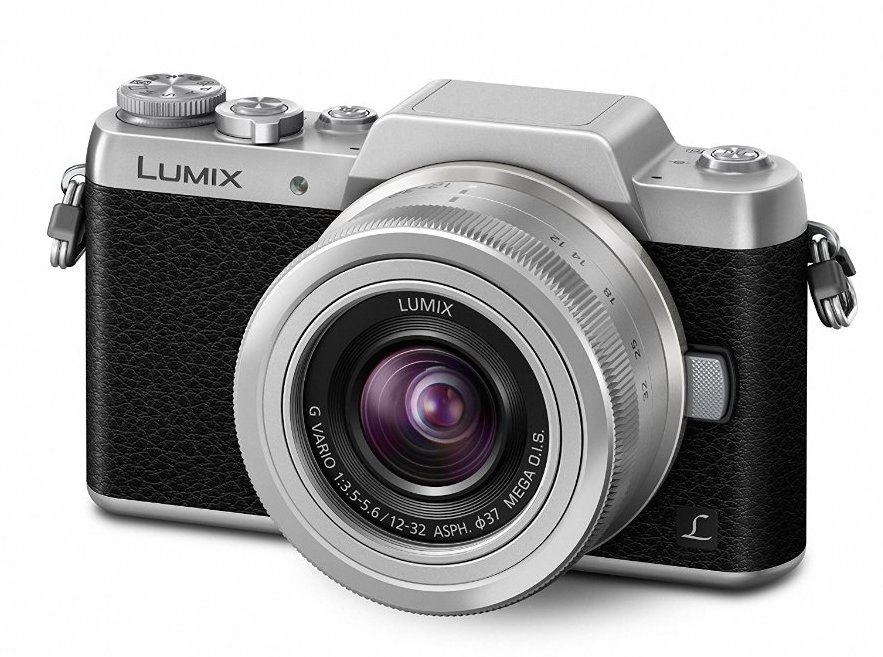
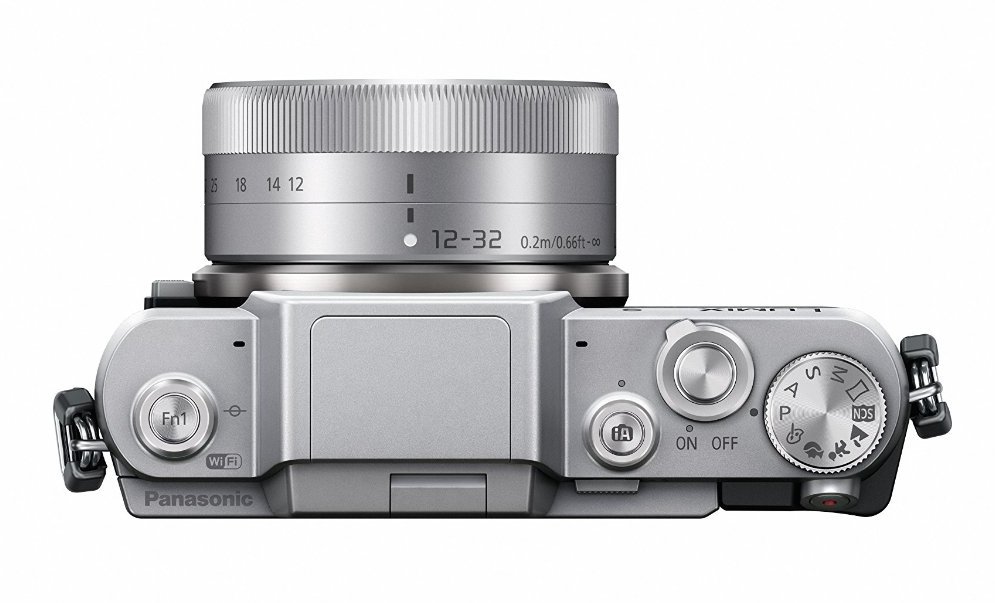
The GF7 bears absolutely no resemblance to any of its predecessors, which embody a more modern and streamlined look. In fact, if appearance were our only clue, you’d almost think that the GF7 were part of the GM line. It is only a tad bigger than the GM5 and features a similar retro design. The only physical difference is what seems to be a hump for an EVF, but don’t be fooled–it is actually a pop-up flash.

, , f/ , ISO
The Panasonic Lumix GF7

As for technical specs, there isn’t anything we haven’t already seen on other Lumix cameras. The 16MP CMOS sensor, processor and 200-25000 ISO sensitivity are from the GX7 (though it also includes an expanded range of 100 ISO), the touch-display is from the GF6, and the 1/16000 shutter speed, AF system and silent shutter are from the GM5. The thing to note is that these combined features come at a significantly lower price point than either the GX7 or the GM5.

, , f/ , ISO
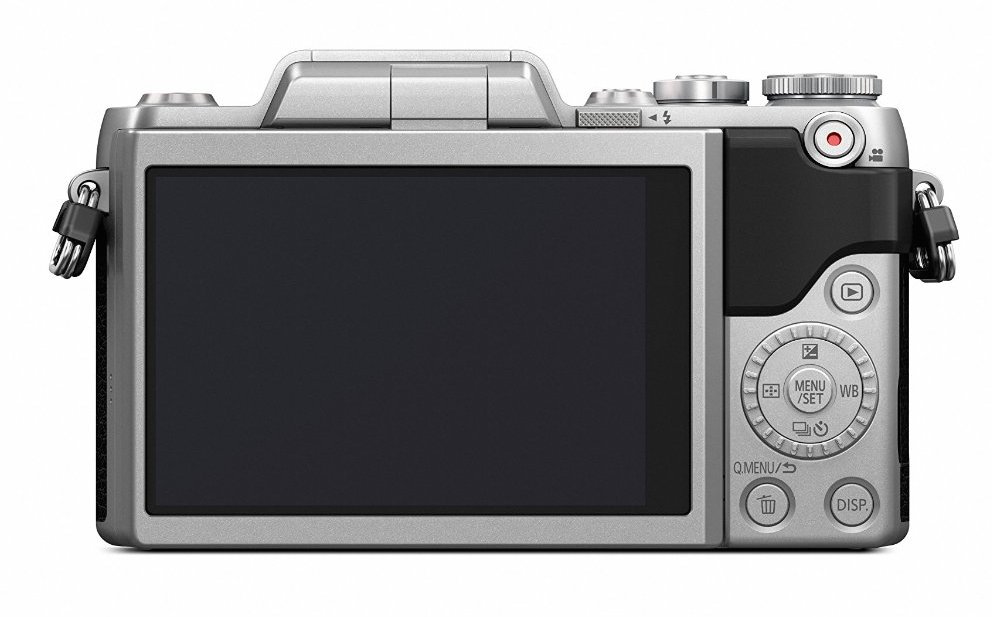
Rear view of the camera

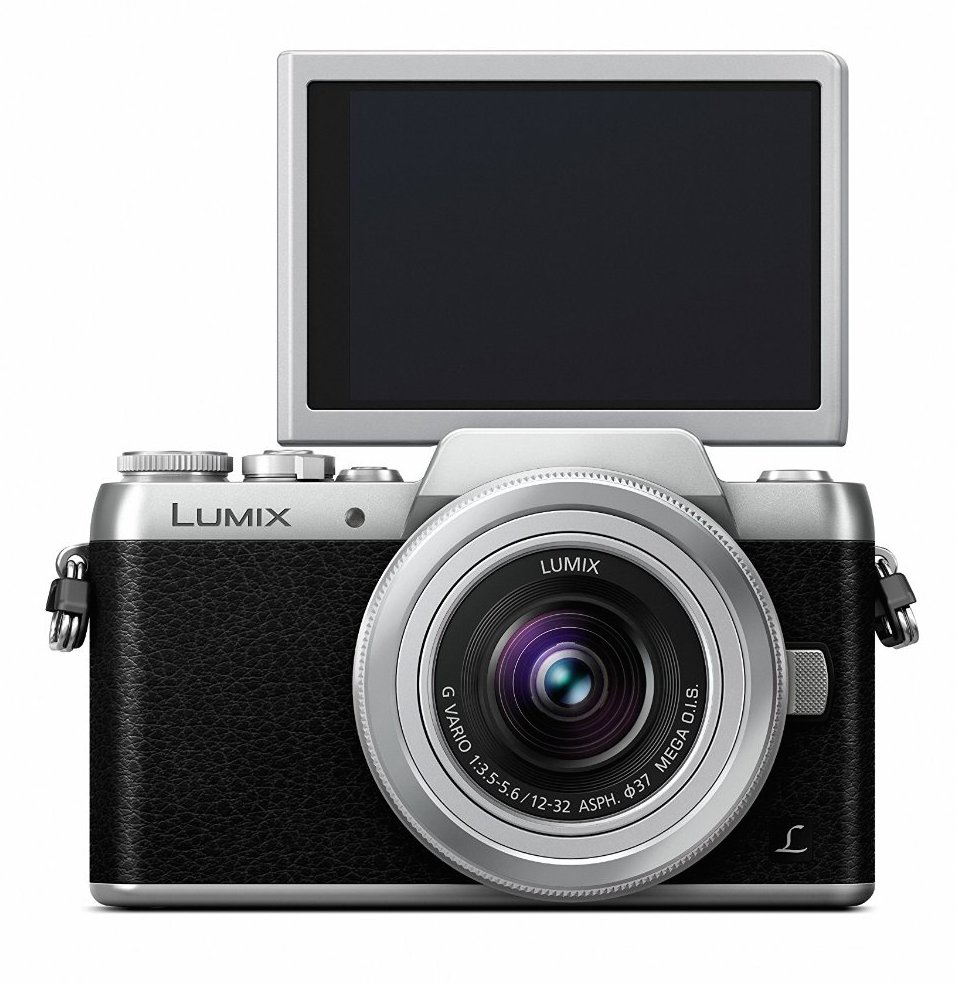
Of course the GF7 wouldn’t be a “selfie camera” if it didn’t have a plethora of selfie features. The camera features a 180 degree tilting touch-display that, when rotated upwards, automatically activates the Self Shot mode. Within this mode, there is the Face Shutter option, which activates the camera’s shutter with a simple wave, and Buddy Shutter, which activates the shutter when the camera detects two faces.

, , f/ , ISO
Tilting touch display flipped up by 180 degrees

You’ll also find “beautifying features” such as Soft Skin, which makes your skin look smoother, Defocus Mode, which adds a defocussed look to the edges of your face, and (don’t laugh) a Slimming Mode, which will give your face a slimmer appearance. Add to this the Jump Snap mode that, with the help of your smartphone’s accelerometer, detects the highest point of your jump to create the perfect mid-air shot, and you have the perfect selfie camera.

lumix-gf7-2
Top view of the camera

The GF7 also brings connectivity to a higher level. Though isn’t NFC support, you can now wirelessly connect the camera to your smart device without a password.

The camera’s video functionalities have also been improved over previous GF models. It can shoot 1080p Full HD movies at rates of up to 60 frames per second in AVCHD 50p or MPEG-4/H.264 formats.

, , f/ , ISO
GF7 with 14-42mm attached

The downfall of this camera and its contemporaries is that its going price of nearly $600 (with the 12-32mm kit lens) is still far beyond what most entry-level users are willing to spend. That said, camera companies have been trying to find a way around this issue. For example, to promote its own selfie camera, the Pen E-PL7, Olympus has targeted fashion bloggers, a small yet powerful niche of amateur users who regularly take selfies and are willing to spend money on fashionable products. To achieve success with the GF7, it is possible that Panasonic will have to embrace a similar strategy.

The Panasonic Lumix GF7 will be available in March 2015 and will come in three colours–silver, brown and pink.

Does the Panasonic Lumix GF7 interest you? Do you think it will be successful? Share your thoughts below!

Filed Under: Mirrorless News

Elation for Entry-Level Photographers – The new Fujifilm X-A2 and XQ2 are here

15/01/2015 By Heather

The beginning of 2015 saw no rest for the rumour mill as talk of a new entry-level interchangeable Fujifilm camera began to spread across the web. Now, only two weeks into the new year, we discover that the rumours were true, though instead of updating the X-M1, Fujifilm has opted to the replace the cheapest X series camera, the X-A1.

[Read more…] about Elation for Entry-Level Photographers – The new Fujifilm X-A2 and XQ2 are here

Filed Under: Mirrorless News

Introducing ‘The State of Mirrorless’ Video Series with Ugo Cei, Andre Appel & Mathieu Gasquet

14/01/2015 By Heather

Are you interested in the most recent news, rumours and developments surrounding the mirrorless world? Want to sit in on interesting discussions with prolific photographers, bloggers, reviewers and industry representatives as they discuss varied topics such as the hottest mirrorless cameras and lenses, useful photography tips and techniques, travel with mirrorless cameras, and more?

If so, you’ll definitely want to subscribe to The State of Mirrorless, one of the first video series on the Internet dedicated entirely to the mirrorless camera segment. It is hosted by Italian photographer Ugo Cei of F Stop Lounge who, during each 30-40 minute episode, puts thought-provoking questions to his guests and encourages active dialogue that goes beyond the superficial.

[Read more…] about Introducing ‘The State of Mirrorless’ Video Series with Ugo Cei, Andre Appel & Mathieu Gasquet

Filed Under: Mirrorless News

  • « Go to Previous Page
  • Page 1
  • Interim pages omitted …
  • Page 38
  • Page 39
  • Page 40
  • Page 41
  • Page 42
  • Interim pages omitted …
  • Page 87
  • Go to Next Page »

Primary Sidebar

Reminder

We have moved! Our latest reviews can be found on Mirrorless Comparison and YouTube.

DISCLAIMER & COPYRIGHT NOTICE

Heather Broster is participant in the Amazon Services LLC Associates Program, an affiliate advertising program designed to provide a means for us to earn fees by linking to Amazon.com and affiliated sites.

Heather Broster is a participant in the Amazon EU Associates Programme, an affiliate advertising programme designed to provide a means for sites to earn advertising fees by advertising and linking to Amazon.co.uk.

Heather Broster and Mathieu Gasquet are also participants in the following affiliate programs: B&H Photo Affiliate Program, Ebay Partner Network, Skylum (Impact Radius), Expert Shield, The Inspired Eye, and Mediterranean Photo Tours.

To read more information, visit our full Disclaimer page. Thank you!


© HEATHER BROSTER/MATHIEU GASQUET AND MIRRORLESSONS, 2013-2024

Unauthorized use and/or duplication of this material without express and written permission from this blog’s author and/or owner is strictly prohibited. Excerpts and links may be used, provided that full and clear credit is given to Heather Broster/Mathieu Gasquet and Mirrorless Comparison with appropriate and specific direction to the original content.