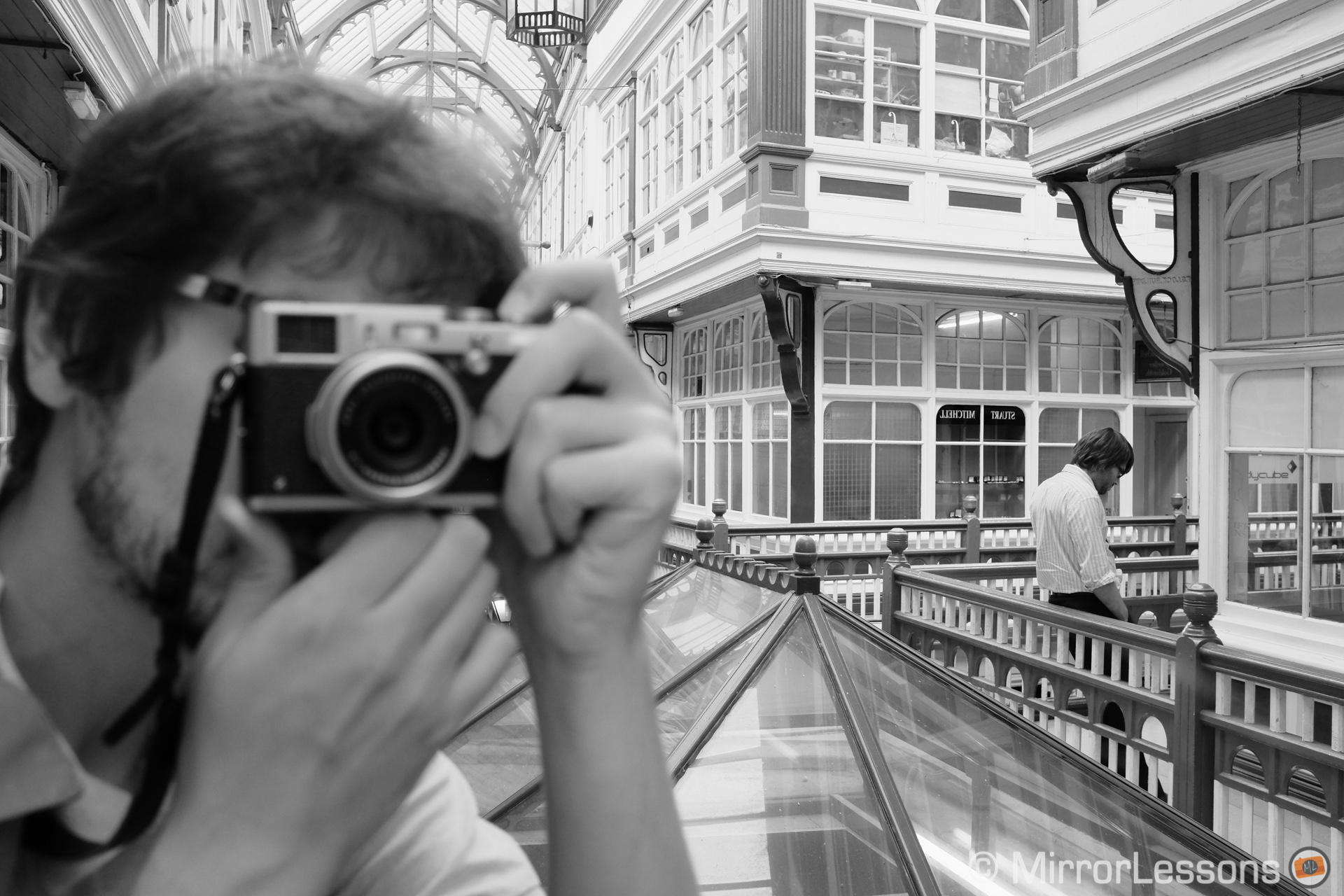
For genres like studio work or portraiture, there are still few photographers who feel confident about replacing their DSLR with a mirrorless camera. If they do have one, it usually functions as either a second body or a casual travel/street camera.
Street photography is a different story.
Many street photographers have switched over to mirrorless cameras because they provide a lighter, more discreet and more compact option reminiscent of film and rangefinder cameras. They aren’t so obsessed with high image quality and pixel peeping because street images are less about perfection and more about capturing the essence of the moment. (This is why you’ll see many street photographers using tools as simple as the iPhone for their work.) In fact, I’d say around 80% of the street photographers we’ve spoken to use a digital mirrorless camera of some sort for their work.
In this article, we’ve listed what we believe are the five best mirrorless cameras for street photography. The basic criteria we’ve set for these cameras is as follows:
-
Is it small and light?
Street photographers want to move quickly and lightly. A light body, and if applicable, compact interchangeable lenses are a must.
-
Is it silent?
Nothing says “photographer alert” like the sound of a clacking shutter. Street photographers want a camera that is as silent as the grave, or one that at least provides the option of a silent shutter.
-
Is it discreet in appearance?
Street photographers don’t want to stand out like a sore thumb in a crowd. They want to observe the scene but not become a part of it. A discreet-looking camera can help achieve that goal.
Note: It is true that almost any mirrorless camera, being small and light, can easily fit into the street photography genre. The choices you see here are based on our own experiences and those of other photographers with whom we’ve spoken. If you have a camera that you feel absolutely deserves recognition as a street camera, do let us know in the comments section!
Olympus OM-D E-M10
Photographer: Thomas Leuthard / Facebook / Google+ / Flickr
The Olympus OM-D E-M10 is smallest and cheapest of the OM-D series. Because of that I like and use it for my street photography.
The smaller your camera is, the less people see you as a photographer. They see you as a tourist and don’t care about you taking photos.
Although it is pretty affordable, the speed of the autofocus and the image quality is excellent. It has all the basic features a street photography camera needs to have. I use it in P mode to focus on content and composition. It does a perfect job as the tool that extends my left eye. With the tilted LCD I can take shots from positions where DSLR users have to lay on the floor and with 8 frames a second I never miss the decisive moment. When you have some spare money, you should go for a prime lens to make it even more powerful.
In the end it’s your choice how you capture what you see with your eyes. My choice is the Olympus E-M10.
Images are © Thomas Leuthard



Fujifilm X100/s
Photographer: Mathieu Gasquet
I’ve written extensively on MirrorLessons about how good the Fujifilm X100S is for many applications and not just street photography. However the latter is certainly its main and most natural application.
First, the camera has a wonderful design that is very discreet especially now that the black version is available. The camera has a very good silent mode that isn’t 100% noiseless but will certainly make its shutter leaf sound blend in with the ambient noise around you. The AF is quick though not the quickest. It works best when the shutter button is pressed down entirely from the start (meaning that you aim and shoot without waiting for the AF lock confirmation) and can also work surprisingly well in AF-C because the autofocus is more reactive and you get less back and forth movement of the elements inside the lens. Of course the camera can also be used in manual focus with MF assist such as peaking and digital split image but unfortunately there isn’t a hyper focal scale on the lens itself, something that street photographers know very well and would appreciate.
Image quality is fantastic as with every Fuji X-trans sensor. What I also love about this camera is its fixed lens (35mm equivalent on full frame). While this could seem limiting at the beginning, as with every prime lens it forces you to move to find the perfect composition. In the end, I enjoyed working with a fixed focal length more than with a zoom.
I am not a professional street photographer and there are many cameras that can suit the genre well but if I had to choose one, I’d have no doubt about the X100s. Among all the cameras I have tested, it is on my top 2 list.
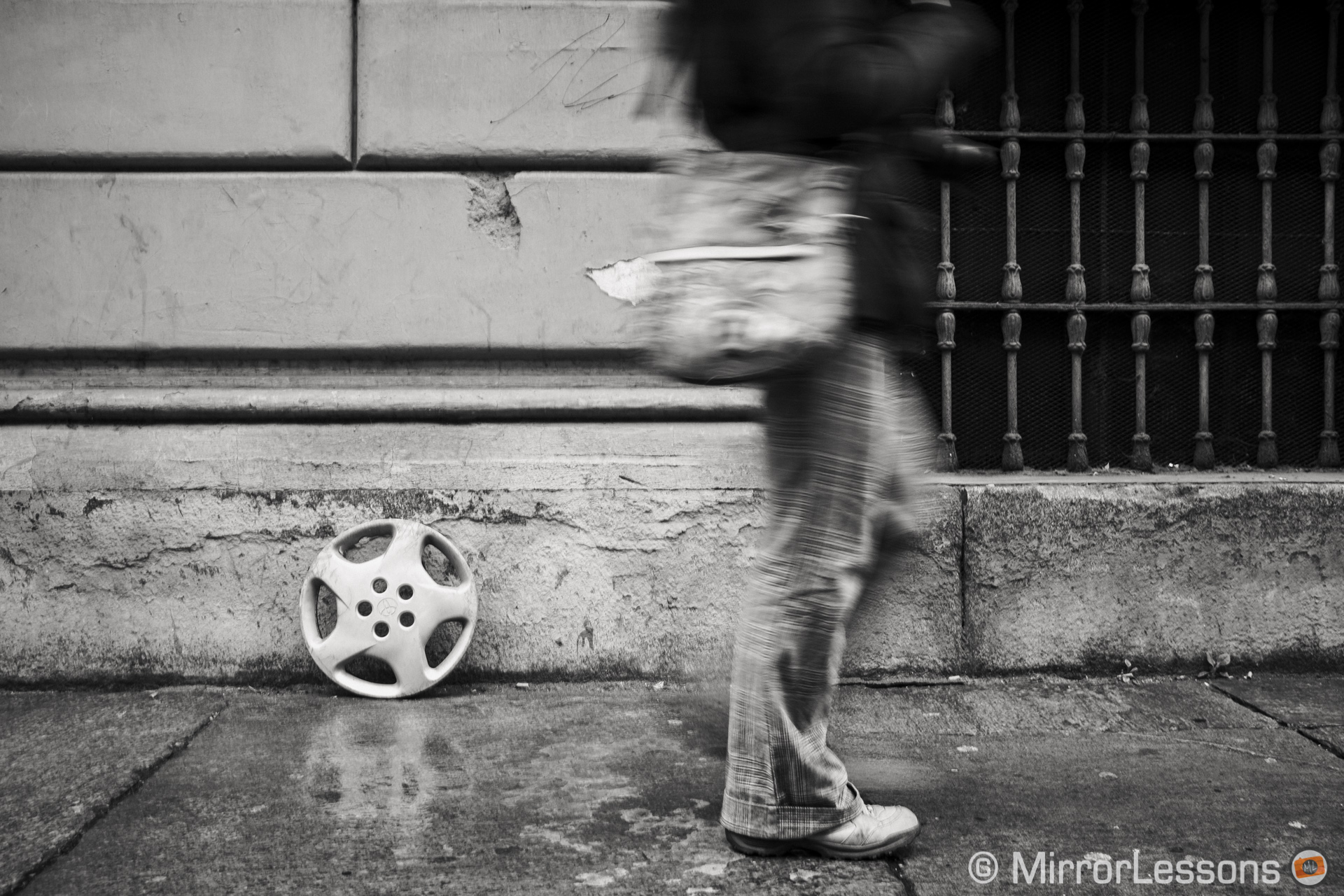


Fujifilm X20
Photographer: Heather Broster
The Fujifilm X20 is everything a street camera should be. It is compact enough to slip inside my handbag, and has the look of a film camera despite being completely digital on the inside.
Focussing is completely silent and surprisingly fast for a second-generation Fujifilm camera. Something unique to the X20 and its predecessor the X10 is the presence of an optical viewfinder. Whereas with electronic viewfinders you will always experience a slight lag, the OVF of the X20 allows you capture exactly what you see at the precise moment you see it, just as you would with a film camera.
Since it has a smaller sensor than other mirrorless cameras, the low-light performance isn’t great but the graininess actually doesn’t bother me. In fact, I feel it adds to the film-like appearance of the images it produces.
Speaking of film-like rendering, I am also a big fan of the black and white film simulation modes. Since most of my street photography is in black and white, I use the OOC JPGs produced with these simulation modes all the time.
I also love the zoom on the X20. At 28-112mm, it covers a full range of focal lengths, including the golden 35mm equivalent.

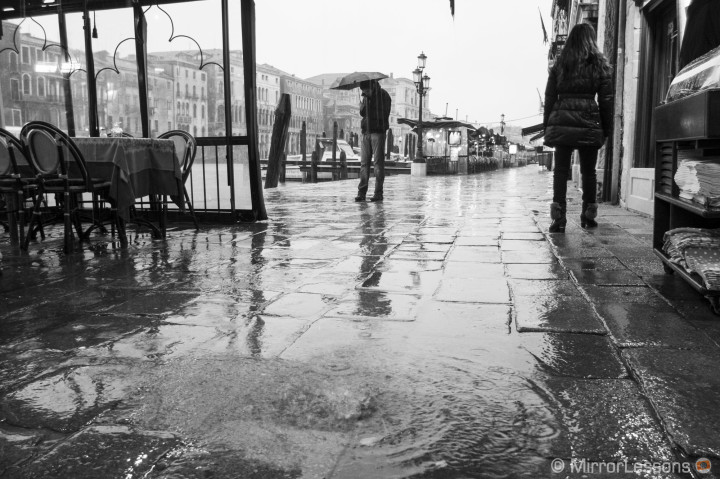

Panasonic Lumix GM1
Photographer: Satoki Nagata / Facebook
I used a pre-production Lumix GM1 for about three weeks, and I have been using a production model for about 5 months now.
A camera is a tool to make images that express one’s own visual voice. There are different types of cameras; we must choose the appropriate one according to the shooting situation. On the street, a smaller body with multiple lenses is usually preferable, and in that regard, the GM1 is a good choice. The quality of images taken by the GM1 is impressive, considering the size of the camera. It is quiet and can take photos with completely no sound in silent mode. These characteristics are all good for street photography.
I prefer using manual adjustment for shutter speed, aperture, ISO, and focusing. On the GM1, most of the manual adjustments can be done using the touch screen and rotating button. For manual focusing, peaking function and magnification, it works fairly well. However, I wish the kit lens had a manual focus ring like other lenses, instead of a touch screen.
Overall, this is a small, yet highly capable camera. It is certain that the GM1 is not perfect for every situation, as is the case for all cameras. But, it is good to do street photography as well as for backup for some serious documentary work for me.
My “Lights in the city” series was all taken by GM1. Yes, it is different from other cameras and was not the best camera for the project but it was challenging and fun to overcome the limitations of the camera to make satisfying images.
Images are © Satoki Nagata


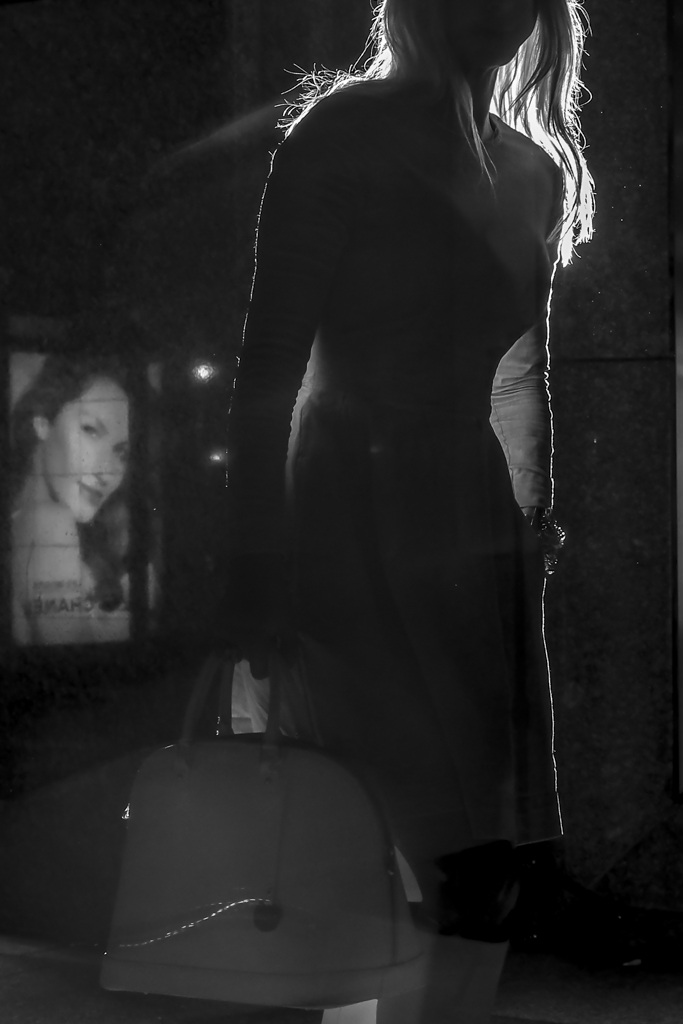
Ricoh GR
Photographer: Don Springer / Facebook / Twitter / Google+ / Flickr
There are many shooters that do all different genres of photography and street happens to fall in line with everything else they do. That’s fine for most. Using just about any camera is fine for most shooters because cameras can support any genre and they should. Enter the street shooter. This shooter is a very careful person looking for the camera that will work with him/her and not create any intrusion on vision. This means ergonomics, interface, size and the ability to get the job done without grief.
Ricoh has been making cameras for decades, many decades. The Ricoh GR is the current and finest model in the “G” line. The GR has an amazing user Interface that is purely intuitive and very fast operating. It fits easily in a front jeans pocket and is compact and light in the hand. Using ‘SNAP” focus, you are at Hyperfocal Distance at the press of a button.
For street shooting this is essential because it frees the shooter to just SEE and FRAME. The GR will hold the settings set and can be changed with a press of a button. Being able to configure a camera on the spur of the moment is absolutely necessary and the GR does so painlessly. The screen is very bright and contrasty so it’s easy to see what your shooting.
The lens on the GR is well, amazing coupled with the APS-C sensor and now we are talking about Image Quality that rivals anything available. The GR is extremely quick to make the photo and I do mean quick. No matter how fast YOU are, if the camera slows you down, you are not as quick as you should be.
There is no lag with the GR. Hold it in your hand, frame with your eye and raise the camera.. breathe and ….CLICK! Due to it’s compact size, you feel almost invisible as you make the photo. The other very important thing with the GR is it’s ability to use High ISO and give a very nice image.
All in all, if you’re looking for a real serious street camera, designed for street… The Ricoh GR fits the bill better than perfectly.
Images are © Don Springer


Which is your favourite mirrorless camera for street photography and why? 🙂
